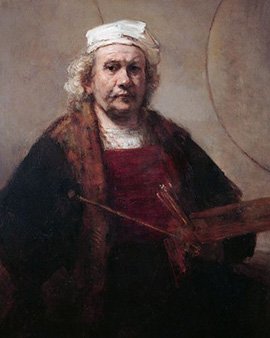
The golden age of stands for a period of flourishing economy and a thriving economy. The wealth was accompanied by a great deal of freedom and the elevation of art to an economic sector. In early treatises on art, special emphasis is placed on a painter who was able to gain much from all three pleasant aspects of life. Rembrandt-van-Rijn loved prosperity and the extravagant life. As an artist he loved the freedom to realize his ideas and profited from the brisk trade in works of art. The highest good for the artist was painting, which he lived out like no other painter.
Already in the 17th century, Amsterdam set an example of liberality, tolerance and a unique cultural dynamic. Different languages were spoken in the streets and trade was part of the city's self-image. Rembrandt regularly moved to Amsterdam. At times his painting took on an entrepreneurial approach. His works are reminiscent of large scenes from a stage play. The figures are skilfully positioned and take centre stage through a skilful play of light. The Night Watch shows this play of light and dark to perfection. The painting shows a day scene and awakens in the viewer the feeling of an evening gathering. Rembrandt implemented the painterly principles of the Italian masters and developed a masterly manner of representation from them. Drama spoke from the paintings and he combined his figures with feelings. This becomes particularly clear in portraits in which he allowed his models and himself to laugh.
Rembrandt loved the opportunities his talent offered him. He founded his own workshop to paint and to have his paintings painted. Quite a few of his students' paintings bear the big name. The painter earned well and invested a considerable part of his money in paintings of other artists. He also bought his own paintings. In the hope of reselling them later at a profit, Rembrandt borrowed money. The painter lived in a complicated economic construct, which left the artist in his old age penniless. His treasury was dissolved and produced paintings by Rubens and Raphael. In the end, the great painter was left with painting and a life in a rare time of freedom.
 ×
× 






 Passionate Customer Service

.jpg "Christ in the Storm on the Lake of Galilee, 1633 by Rembrandt van Rijn")
.jpg)
.jpg "Return of the Prodigal Son by Rembrandt van Rijn")
.jpg)
.jpg "Pallas Athena (in Armour) by Rembrandt van Rijn")
.jpg)
.jpg "The Night Watch by Rembrandt van Rijn")
.jpg)
.jpg "The Man with the Golden Helmet, c. 1650 by Rembrandt van Rijn")
.jpg)
.jpg "Self-portrait at a young age by Rembrandt van Rijn")
.jpg)
.jpg "The Night Watch by Rembrandt van Rijn")
.jpg)
.jpg "Philosopher, thinking by Rembrandt van Rijn")
.jpg)
.jpg "The Return of the Prodigal Son by Rembrandt van Rijn")
.jpg)
.jpg "The Mill by Rembrandt van Rijn")
.jpg)
.jpg "Falconer with Falcon and Feathered Hat by Rembrandt van Rijn")
.jpg)
 - (MeisterDrucke-587837).jpg "Portrait of Saskia van Uylenburgh (1612-42) by Rembrandt van Rijn")
 - (MeisterDrucke-587837).jpg)
.jpg "The Nightwatch by Rembrandt van Rijn")
.jpg)
.jpg "The Polish Rider by Rembrandt van Rijn")
.jpg)
.jpg "The Three Trees, 1643 by Rembrandt van Rijn")
.jpg)
.jpg "An Old Woman Reading, Probably the Prophetess Hannah, 1631 by Rembrandt van Rijn")
.jpg)
.jpg "The Holy Family, c. 1645 by Rembrandt van Rijn")
.jpg)
.jpg "The Anatomy Lesson of Dr. Nicolaes Tulp by Rembrandt van Rijn")
.jpg)
.jpg "Head of Christ by Rembrandt van Rijn")
.jpg)
.jpg "Tobias Healing His Father's Blindness, c. 1640-45 by Rembrandt van Rijn")
.jpg)
.jpg "Joseph's Dream in the Stable in Bethlehem, 1645 by Rembrandt van Rijn")
.jpg)
.jpg "Woman urinating under a tree, 1631 by Rembrandt van Rijn")
.jpg)
.jpg "The Return of the Prodigal Son, c. 1668 by Rembrandt van Rijn")
.jpg)
.jpg "Portrait of an Old Jew, 1654. by Rembrandt van Rijn")
.jpg)
.jpg "Christ with Arms Folded, 1656-1661 by Rembrandt van Rijn")
.jpg)
.jpg "Portrait of an Old Jew by Rembrandt van Rijn")
.jpg)
.jpg "The Prophet Jeremiah Mourning over the Destruction of Jerusalem, 1630 by Rembrandt van Rijn")
.jpg)
.jpg "The Artist in his Studio by Rembrandt van Rijn")
.jpg)
.jpg "The Adoration of the Shepherds, 1646 by Rembrandt van Rijn")
.jpg)
_-_(MeisterDrucke-127101).jpg "Lion Resting by Rembrandt van Rijn")
_-_(MeisterDrucke-127101).jpg)
.jpg "Saint Paul in Prison, 1627 by Rembrandt van Rijn")
.jpg)
 - (MeisterDrucke-89257).jpg "A Man Urinating, 1631 by Rembrandt van Rijn")
 - (MeisterDrucke-89257).jpg)
 - (MeisterDrucke-50643).jpg "The Three Crosses, 1653 by Rembrandt van Rijn")
 - (MeisterDrucke-50643).jpg)
.jpg "The Golf-Player, 1654 by Rembrandt van Rijn")
.jpg)
The_shell_-_(MeisterDrucke-1343982).jpg "The Shell (Conus marmoreus) by Rembrandt van Rijn")
The_shell_-_(MeisterDrucke-1343982).jpg)
.jpg "Head of an Old Man by Rembrandt van Rijn")
.jpg)
 as Flora - (MeisterDrucke-609964).jpg "Saskia van Uylenburgh (1612-1642) as Flora by Rembrandt van Rijn")
 as Flora - (MeisterDrucke-609964).jpg)
.jpg "Self-Portrait by Rembrandt van Rijn")
.jpg)
.jpg "Man in Oriental Dress by Rembrandt van Rijn")
.jpg)
.jpg "Pilgrims of Emmaus. Painting by Rembrandt Harmenszoon van Rijn, known as Rembrandt (1606-1669). Dutch school by Rembrandt van Rijn")
.jpg)
.jpg "Christ and the Disciples at Emmaus by Rembrandt van Rijn")
.jpg)
.jpg "Titus at his Desk by Rembrandt van Rijn")
.jpg)
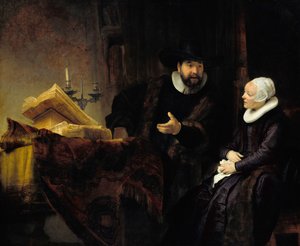

.jpg "Balaam and his Ass by Rembrandt van Rijn")
.jpg)
.jpg "An Old Man in Red by Rembrandt van Rijn")
.jpg)
 in Rich Costume - (MeisterDrucke-587502).jpg "Portrait of Saskia van Uylenburgh (1612-42) in Rich Costume (detail) by Rembrandt van Rijn")
 in Rich Costume - (MeisterDrucke-587502).jpg)
.jpg "The Abduction of Europa by Rembrandt van Rijn")
.jpg)
_-_(MeisterDrucke-44208).jpg "The Anatomy Lesson of Dr. Nicolaes Tulp, 1632 (detail of 7543) by Rembrandt van Rijn")
_-_(MeisterDrucke-44208).jpg)
_-_(MeisterDrucke-250117).jpg "Self-Portrait, Etching at a Window, 1648 by Rembrandt van Rijn")
_-_(MeisterDrucke-250117).jpg)
.jpg "Saskia in pompous dress by Rembrandt van Rijn")
.jpg)
.jpg "The Twelve-Year-Old Jesus before the Scribes, c. 1655 by Rembrandt van Rijn")
.jpg)
.jpg "Jacob's struggle with the angel by Rembrandt van Rijn")
.jpg)
.jpg "The Apostle Peter Denies Christ by Rembrandt van Rijn")
.jpg)
.jpg "Two Black People, 1661 by Rembrandt van Rijn")
.jpg)
.jpg "Woman Carrying a Child Downstairs by Rembrandt van Rijn")
.jpg)
.jpg "Self Portrait at the Age of 34, 1640, 1912 by Rembrandt van Rijn")
.jpg)
.jpg "Girl in a Picture Frame, 1641 by Rembrandt van Rijn")
.jpg)
_-_(MeisterDrucke-122126).jpg "Portrait of a man in a turban, c. 1630 by Rembrandt van Rijn")
_-_(MeisterDrucke-122126).jpg)
.jpg "The Jewish Bride, c. 1667 by Rembrandt van Rijn")
.jpg)
.jpg "Abraham and the Three Angels, 1630s by Rembrandt van Rijn")
.jpg)
.jpg "Simeon in the Temple, 1669 by Rembrandt van Rijn")
.jpg)
.jpg "Portrait of a man in military costume, 1650 by Rembrandt van Rijn")
.jpg)
.jpg "Young Boy in Fancy Dress, c. 1660 by Rembrandt van Rijn")
.jpg)
.jpg "Belshazzar's Feast, c. 1636-38 by Rembrandt van Rijn")
.jpg)
.jpg "Self-portrait with his wife Saskia as the Prodigal Son by Rembrandt van Rijn")
.jpg)
.jpg "A Bearded Old Man, Wearing a Brown Coat and Russet Hat, 1651 by Rembrandt van Rijn")
.jpg)
 - (MeisterDrucke-37268).jpg "The Windmill, 1641 by Rembrandt van Rijn")
 - (MeisterDrucke-37268).jpg)
.jpg "The Apostle Simon, 1661 by Rembrandt van Rijn")
.jpg)
.jpg "Transfiguration of Christ, pen drawing by Rembrandt, Holland, undated, 19th century by Rembrandt van Rijn")
.jpg)
.jpg "The Woman taken in Adultery, 1644 by Rembrandt van Rijn")
.jpg)
.jpg "Doctor Faustus by Rembrandt van Rijn")
.jpg)
.jpg "Self-portrait with beret and wide-eyed, 1630 by Rembrandt van Rijn")
.jpg)
.jpg "Old Man with Beard by Rembrandt van Rijn")
.jpg)
.jpg "Danaë, 1643, detail of 47569 by Rembrandt van Rijn")
.jpg)
.jpg "Bust of an Old Bearded Man, Looking Down by Rembrandt van Rijn")
.jpg)
.jpg "The Road to Emmaus by Rembrandt van Rijn")
.jpg)
_oil_on_-_(MeisterDrucke-943021).jpg "Saint Paul in Prison. Painting by Rembrandt Harmensz van Rijn (1606-1669) by Rembrandt van Rijn")
_oil_on_-_(MeisterDrucke-943021).jpg)
.jpg "The Mill, 1641 by Rembrandt van Rijn")
.jpg)
_Oil_on_canv_-_(MeisterDrucke-1028610).jpg "Peter the Apostle by Rembrandt van Rijn")
_Oil_on_canv_-_(MeisterDrucke-1028610).jpg)
.jpg "Rembrandt in a Cap, Open-Mouthed and Staring: Bust in Outline by Rembrandt van Rijn")
.jpg)
.jpg "The Return of the Prodigal Son by Rembrandt van Rijn")
.jpg)
_-_(MeisterDrucke-903594).jpg "The Apostle Paul by Rembrandt van Rijn")
_-_(MeisterDrucke-903594).jpg)
.jpg "Canal with an Angler and Two Swans, 1650 by Rembrandt van Rijn")
.jpg)
.jpg "The Monk in the Cornfield by Rembrandt van Rijn")
.jpg)
.jpg "The old rabbi by Rembrandt van Rijn")
.jpg)
.jpg "Christ Presented to the People, 1655 by Rembrandt van Rijn")
.jpg)
.jpg "Judas returning the thirty pieces of silver by Rembrandt van Rijn")
.jpg)
.jpg "Self-Portrait, ca. 1659 by Rembrandt van Rijn")
.jpg)
.jpg "Christ with two disciples on the road to Emmaus. by Rembrandt van Rijn")
.jpg)
_-_(MeisterDrucke-60199).jpg "Portrait of Hendrikje Stoffels (1625-63) by Rembrandt van Rijn")
_-_(MeisterDrucke-60199).jpg)
.jpg "Portrait of a Man by Rembrandt van Rijn")
.jpg)
.jpg "Landscape with a Stone Bridge by Rembrandt van Rijn")
.jpg)
.jpg "Lion Resting, Turned to the Left, c1650 by Rembrandt van Rijn")
.jpg)
.jpg "Landscape with a tower, c. 1651 by Rembrandt van Rijn")
.jpg)
.jpg "The Blinding of Samson by Rembrandt van Rijn")
.jpg)
.jpg "Self-Portrait Etching at a Window by Rembrandt van Rijn")
.jpg)
.jpg "The Kitchen Maid by Rembrandt van Rijn")
.jpg)
.jpg "The Raising of the Cross by Rembrandt van Rijn")
.jpg)
.jpg "Christ Preaching (The Hundred Guilder Print) by Rembrandt van Rijn")
.jpg)
.jpg "Self-portrait as the Apostle Paul by Rembrandt van Rijn")
.jpg)

 +43 4257 29415
 support@meisterdrucke.com
 Mo-Do: 7:00 - 16:00 | Fr: 7:00 - 13:00