-
 ×
×
- Home
- Art Prints ▸
- Artists ▸
- Categories ▸
- Art Styles ▸
-
Picture Frame ▸
- All decorative frames
- Baroque decorative frames
- Simple decorative frames
- Rustic decorative frames
- Floating frames
- Golden decorative frames
- Silver decorative frames
- White decorative frames
- Black decorative frames
- Wood-look decorative frames
- Shabby chic decorative frames
- Thin decorative frames
- Thick decorative frames
-
Print Media ▸
- All print media
- Canvas Leonardo (satin)
- Canvas Salvador (matte)
- Canvas Raphael (matte)
- FineArt Photo Matte
- FineArt Photo Satin
- FineArt Photo Baryte
- FineArt Photo Glossy
- Watercolor Paper Munch
- Watercolor Paper Renoir
- Watercolor Paper Turner
- Watercolor Paper Dürer
- Natural Line Hemp
- Natural Line Rice
- Kozo White, 110g
- Kozo Natural, 110g
- Inbe White, 125g
- Unryu, 55g
- Bamboo, 110g
- Premio Unryu, 165g
- Murakumo Natural, 42g
- Bizan Natural, 300g
- Bizan White, 300g
- Aluminum composite 3mm
- Acrylic glass 5mm
- Order Sample Set
- Which print medium is right for you?
Canvas
Photo Paper
Watercolor Board
Natural Line
Japanese Paper
Special Media
More information
-
Help & Service ▸
- Contact us
- Sell your art
- Frequently Asked Questions
- Job Openings
- Complaint
- Order Samples
- Order Vouchers
- Shipping costs
- Production time
- Sustainability
- Image research
- Special requests
- Who are we?
- Pricing policy
- Company policy
- Quality promise
- Stretcher frame
- Mats
- Decorative frames
- Glazing
- Fillets
- Mounting systems
- Print media
- Care tips
- Legal Notice
- Terms & Conditions
- Privacy Policy
- Right of Cancellation
Info & Service
More information
Good to know
Legal information
- Shop ▸
- Contact







 Passionate Customer Service
.jpg "The Ice Sea by Caspar David Friedrich")
.jpg)
.jpg "Sky Study by Joseph Mallord William Turner")
.jpg)
.jpg "Shichiri Beach in Sagami Province by Katsushika Hokusai")
.jpg)
.jpg "Moonrise by the Sea by Caspar David Friedrich")
.jpg)
.jpg "Cotopaxi by Frederic Edwin Church")
.jpg)
.jpg "Vesuvius in Eruption by Joseph Mallord William Turner")
.jpg)
.jpg "Two Men Contemplating the Moon by Caspar David Friedrich")
.jpg)
.jpg "Noon by Caspar David Friedrich")
.jpg)
.jpg "Winter Landscape, 1835-8 by Barend Cornelis Koekkoek")
.jpg)
.jpg "The Quiet River, 1913 by Peder Monsted")
.jpg)
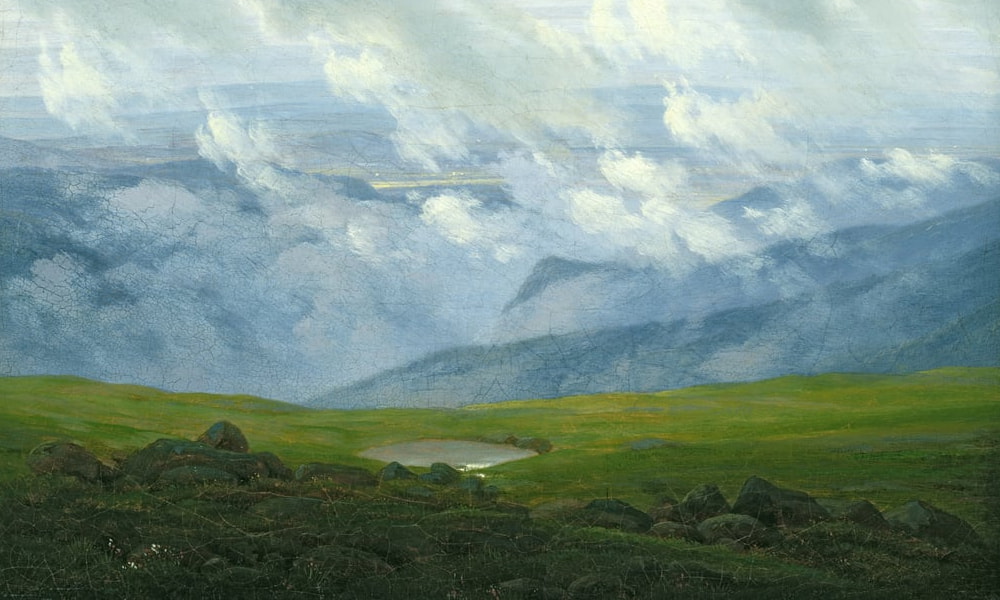
.jpg "Drifting Clouds by Caspar David Friedrich")
.jpg)
 - (MeisterDrucke-278621).jpg "Wiltshire Landscape, 1937 by Eric Ravilious")
 - (MeisterDrucke-278621).jpg)
.jpg "Moon Rising Over the Sea by Caspar David Friedrich")
.jpg)
.jpg "Le Lavandou by Pierre-Auguste Renoir")
.jpg)
.jpg "The Grammont by Ferdinand Hodler")
.jpg)
.jpg "Alpine Hut in Rainy Weather by Friedrich Gauermann")
.jpg)
.jpg "Summer Night by Kitty Lange Kielland")
.jpg)
.jpg "Effects of Good Government in the Countryside, 1388-40 by Ambrogio Lorenzetti")
.jpg)
.jpg "Landscape in the Riesengebirge by Caspar David Friedrich")
.jpg)
.jpg "Easter Morning by Caspar David Friedrich")
.jpg)
.jpg "The Summer by Caspar David Friedrich")
.jpg)
.jpg "Italian Landscape with Umbrella Pines, 1807 by Hendrik Voogd")
.jpg)
.jpg "Bridal Veil Falls, Yosemite by Albert Bierstadt")
.jpg)
.jpg "Lake Thun with Stockhorn Range by Ferdinand Hodler")
.jpg)
.jpg "Iris Field in the Evening Light by Timothy Easton")
.jpg)
.jpg "The Beech Forest by Ferdinand Hodler")
.jpg)
.jpg "Stormy Sea Breaking on a Shore, 1840-5 by Joseph Mallord William Turner")
.jpg)
.jpg "Great Barr, Staffordshire by John Glover")
.jpg)
.jpg "Landscape with Nymphs and Satyrs, 1623 by Paul Bril")
.jpg)
 - (MeisterDrucke-160620).jpg "Golding Constable")
 - (MeisterDrucke-160620).jpg)
.jpg "Landscape in Brittany by Paul Gauguin")
.jpg)
.jpg "Bavarian Landscape, 1856 by August Wilhelm Leu")
.jpg)
.jpg "The Valley of Grindelwald, Winter by Ernest Albert Waterlow")
.jpg)
.jpg "Field of Yellow Irises at Giverny by Claude Monet")
.jpg)
.jpg "The Old Pear Tree by John William North")
.jpg)
_Frankonia-Tal_-_(MeisterDrucke-232514).jpg "White Mountains, Frankonia Valley by Asher Brown Durand")
_Frankonia-Tal_-_(MeisterDrucke-232514).jpg)
.jpg "Scottish Landscape by Gustave Dore")
.jpg)
.jpg "Lucerne from the Lake by Joseph Mallord William Turner")
.jpg)
.jpg "Souvenir de Mortefontaine, 1864 by Jean-Baptiste-Camille Corot")
.jpg)
 - (MeisterDrucke-78168).jpg "The Cornfield (near Argenteuil) by Alfred Sisley")
 - (MeisterDrucke-78168).jpg)
 1873 - (MeisterDrucke-79992).jpg "Wild Poppies, near Argenteuil by Claude Monet")
 1873 - (MeisterDrucke-79992).jpg)
.jpg "Field of Poppies, Auvers-sur-Oise, 1890 by Vincent van Gogh")
.jpg)
.jpg "The Falls of Tivoli, 1768 by Hubert Robert")
.jpg)
.jpg "View of Olinda, Brazil, 1662 by Frans Post")
.jpg)
.jpg "Evening Landscape with a Herd of Cattle near Jouy-en-Josas, 1881 by Mihály Munkácsy")
.jpg)
.jpg "Meadow by Alfred Sisley")
.jpg)
.jpg "A Wooded Landscape, 1887 by Andrew McCallum")
.jpg)
.jpg "Landscape with a Mill by Barend Cornelis Koekkoek")
.jpg)
.jpg "Watching from the Walls, Old Provence, 1993 by Timothy Easton")
.jpg)
.jpg "Calais Sands at Low Water, Poissards Gathering Bait, 1830 by Joseph Mallord William Turner")
.jpg)
 - (MeisterDrucke-643104).jpg "Autumn in the Woods by Margo Starkey")
 - (MeisterDrucke-643104).jpg)
_-_(MeisterDrucke-309954).jpg "Stonehenge - A Showery Day by Joseph Mallord William Turner")
_-_(MeisterDrucke-309954).jpg)
 - (MeisterDrucke-361488).jpg "Connemara Landscape, 1908 by William Percy French")
 - (MeisterDrucke-361488).jpg)
 - (MeisterDrucke-643100).jpg "Eton Lock, River Thames by Margo Starkey")
 - (MeisterDrucke-643100).jpg)
.jpg "Cows in a Meadow, 1899 by Charles Collins")
.jpg)
.jpg "On the River Ouse by Joseph Mallord William Turner")
.jpg)
.jpg "The Lauerzersee with Schwyz and the Mythen by Joseph Mallord William Turner")
.jpg)
.jpg "The Pont du Gard, Nimes by William Marlow")
.jpg)
.jpg "Pond at the Edge of a Wood by Pierre Etienne Theodore Rousseau")
.jpg)
 - (MeisterDrucke-251070).jpg "Mount Carmel by Claude Conder")
 - (MeisterDrucke-251070).jpg)
.jpg "Reve Rousse by Lee Campbell")
.jpg)
.jpg "A River Landscape by David Bates")
.jpg)
.jpg "Above the Eternal Peace, 1894 by Isaak Ilyich Levitan")
.jpg)
_-_(MeisterDrucke-317486).jpg "Sunset by Joseph Mallord William Turner")
_-_(MeisterDrucke-317486).jpg)
.jpg "Weymouth Bay by John Constable")
.jpg)
.jpg "The Mill Stream, 1814-15 by John Constable")
.jpg)
.jpg "A Baolee near the Old City of Delhi, plate XVIII from Part 4 of")
.jpg)
.jpg "The Fortress of Konigstein by Bernardo Bellotto")
.jpg)
.jpg "Italian Landscape by Claude Lorrain")
.jpg)
.jpg "Rope bridge near Penipe, crossing the Chambo River, Mexico by Baron Friedrich Alexander von Humboldt")
.jpg)
.jpg "Le Cabanon de Jourdan, 1906 by Paul Cézanne")
.jpg)
.jpg "Landscape with Canal by Aert van der Neer")
.jpg)
.jpg "The Black Rocks at Trouville by Gustave Courbet")
.jpg)
.jpg "Cicero Discovering the Tomb of Archimedes, 1787 by Pierre-Henri de Valenciennes")
.jpg)
.jpg "Landscape with Classical Ruins and Etruscan Sarcophagus by Nicolas Poussin")
.jpg)
.jpg "Lord Torrington")
.jpg)
.jpg "Wooded Landscape with a Stream by Jacob van Ruisdael")
.jpg)
.jpg "Normandy, the Water Path in the Evening, Sahurs by Alfred Sisley")
.jpg)
.jpg "View of Haarlem with Bleaching Grounds by Jacob van Ruisdael")
.jpg)
.jpg "Berck, Cloudy Landscape by Eugene Louis Boudin")
.jpg)
.jpg "Landscape with Waterfall by Jacob van Ruisdael")
.jpg)
.jpg "Lake Maggiore, Italy by Sanford Robinson Gifford")
.jpg)
 - (MeisterDrucke-643101).jpg "Road to Siena by Margo Starkey")
 - (MeisterDrucke-643101).jpg)
.jpg "An Autumn Landscape with a view of Het Steen in the Early Morning (detail) by Peter Paul Rubens")
.jpg)
.jpg "Landscape with grey Clouds, 1897 by Konstantin Andreevic Somov")
.jpg)
.jpg "Landscape in Ecuador by Louis Rémy Mignot")
.jpg)
.jpg "Landscape with Poppies by William Blair Bruce")
.jpg)
.jpg "Alpine Landscape by Joos or Josse de Momper")
.jpg)
.jpg "The Battle of Rivoli on the 14th January 1797 by Baron Louis Albert Bacler d")
.jpg)
_-_(MeisterDrucke-130265).jpg "Arcadian Landscape with a Bust of Flora by Jan van Huysum")
_-_(MeisterDrucke-130265).jpg)
.jpg "Gulf of Palermo, looking towards Cape Zafferano, c.1845 by Carl Wilhelm Goetzloff")
.jpg)
.jpg "The Church of Vernon, Fog by Claude Monet")
.jpg)
.jpg "Landscape with Waterfall by Jacob van Ruisdael")
.jpg)
.jpg "View near the Village of Asceriah, in Abyssinia (engraved by Daniel Havell, 1809) by Henry Salt")
.jpg)
.jpg "First discovery of land by HMS Investigator, September 6th 1850, engraved by E. Walker by Samuel Gurney Cresswell")
.jpg)
.jpg "Landscape with a Shepherd, 1826 by Friedrich Gauermann")
.jpg)
.jpg "Italian Landscape by Jan Dirksz Both")
.jpg)
_-_(MeisterDrucke-658686).jpg "Rural landscape by Samuel Isham")
_-_(MeisterDrucke-658686).jpg)
.jpg "The Bishop")
.jpg)
.jpg "Winter Morning by Alfred Sisley")
.jpg)

 +43 4257 29415
 support@meisterdrucke.com
 Mo-Do: 7:00 - 16:00 | Fr: 7:00 - 13:00