-
 ×
×
- Home
- Art Prints ▸
- Artists ▸
- Categories ▸
- Art Styles ▸
-
Picture Frame ▸
- All decorative frames
- Baroque decorative frames
- Simple decorative frames
- Rustic decorative frames
- Floating frames
- Golden decorative frames
- Silver decorative frames
- White decorative frames
- Black decorative frames
- Wood-look decorative frames
- Shabby chic decorative frames
- Thin decorative frames
- Thick decorative frames
-
Print Media ▸
- All print media
- Canvas Leonardo (satin)
- Canvas Salvador (matte)
- Canvas Raphael (matte)
- FineArt Photo Matte
- FineArt Photo Satin
- FineArt Photo Baryte
- FineArt Photo Glossy
- Watercolor Paper Munch
- Watercolor Paper Renoir
- Watercolor Paper Turner
- Watercolor Paper Dürer
- Natural Line Hemp
- Natural Line Rice
- Kozo White, 110g
- Kozo Natural, 110g
- Inbe White, 125g
- Unryu, 55g
- Bamboo, 110g
- Premio Unryu, 165g
- Murakumo Natural, 42g
- Bizan Natural, 300g
- Bizan White, 300g
- Aluminum composite 3mm
- Acrylic glass 5mm
- Order Sample Set
- Which print medium is right for you?
Canvas
Photo Paper
Watercolor Board
Natural Line
Japanese Paper
Special Media
More information
-
Help & Service ▸
- Contact us
- Sell your art
- Frequently Asked Questions
- Job Openings
- Complaint
- Order Samples
- Order Vouchers
- Shipping costs
- Production time
- Sustainability
- Image research
- Special requests
- Who are we?
- Pricing policy
- Company policy
- Quality promise
- Stretcher frame
- Mats
- Decorative frames
- Glazing
- Fillets
- Mounting systems
- Print media
- Care tips
- Legal Notice
- Terms & Conditions
- Privacy Policy
- Right of Cancellation
Info & Service
More information
Good to know
Legal information
- Shop ▸
- Contact







 Passionate Customer Service
.jpg "Uttewalde Valley by Caspar David Friedrich")
.jpg)
.jpg "The times of day: The evening, 1821-1822 by Caspar David Friedrich")
.jpg)
.jpg "The Quiet River, 1913 by Peder Monsted")
.jpg)
.jpg "Oak Grove, 1887 by Ivan Ivanovich Shishkin")
.jpg)
 c1865 - (MeisterDrucke-76268).jpg "The Road to Bas-Bréau, Fontainebleau (Le Pavé de Chailly), c. 1865 by Claude Monet")
 c1865 - (MeisterDrucke-76268).jpg)
.jpg "Trees and Undergrowth, 1887 by Vincent van Gogh")
.jpg)
.jpg "Autumn Landscape with Four Trees by Vincent van Gogh")
.jpg)
.jpg "Avenue in Overveen by Max Liebermann")
.jpg)
.jpg "Forest of Fontainebleau by Claude Monet")
.jpg)
.jpg "The garden of the magician Klingsor, from the Parzival cycle, Great Music Room, c. 1883-84 by Christian Jank")
.jpg)
.jpg "Italian Landscape with Umbrella Pines, 1807 by Hendrik Voogd")
.jpg)
.jpg "The Sun Fast Sinks in the West by Joseph Farquharson")
.jpg)
.jpg "At the Summer Cottage, 1894 by Ivan Ivanovich Shishkin")
.jpg)
.jpg "P. Mönsted, Birch Forest in Autumn Light by Peder Monsted")
.jpg)
.jpg "Light in the Forest by Albert Bierstadt")
.jpg)
.jpg "Autumn, Poplars, Éragny by Camille Jacob Pissarro")
.jpg)
.jpg "The Catskills, 1859 by Asher Brown Durand")
.jpg)
.jpg "Tropical Forest with Monkeys, 1910 by Henri Rousseau")
.jpg)
.jpg "In The Birch Tree Forest, 1883 by Ivan Ivanovich Shishkin")
.jpg)
.jpg "Summer Day by the Forest Stream by Peder Monsted")
.jpg)
.jpg "The Beech Forest by Ferdinand Hodler")
.jpg)
.jpg "A Meadow in the Bourbonnais, Morning, 1876 by Henri-Joseph Harpignies")
.jpg)
.jpg "Forest Stream in Spring by Peder Monsted")
.jpg)
.jpg "Avenue in Sacrow with Two Riders by Max Liebermann")
.jpg)
_Peinture_de_-_(MeisterDrucke-1325288).jpg "“Times of Day: The Afternoon”, 1821-1822. 22 x 31 cm. Lower Saxony State Museum, Hanover by Caspar David Friedrich")
_Peinture_de_-_(MeisterDrucke-1325288).jpg)
.jpg "Valley in the Serra do Mar, illustration from")
.jpg)
.jpg "Birch Grove by Isaak Ilyich Levitan")
.jpg)
.jpg "Forest Scene by Barend Cornelis Koekkoek")
.jpg)
.jpg "A Corner of the Pond at Giverny by Claude Monet")
.jpg)
.jpg "The Judges")
.jpg)
.jpg "Morning in a Pine Forest, 1889 by Ivan Ivanovich Shishkin")
.jpg)
.jpg "Black Person Attacked by a Jaguar, 1910 by Henri Rousseau")
.jpg)
.jpg "Landscape at Beaulieu, c. 1893 by Pierre-Auguste Renoir")
.jpg)
.jpg "The Old Pear Tree by John William North")
.jpg)
.jpg "Woods in Summer by Pierre Bonnard")
.jpg)
.jpg "Siverskaya, 1896 by Ivan Ivanovich Shishkin")
.jpg)
.jpg "Hinds in the Undergrowth, c.1900 by Pierre Bonnard")
.jpg)
.jpg "Landscape with Nymphs and Satyrs, 1623 by Paul Bril")
.jpg)
.jpg "The Beeches by Asher Brown Durand")
.jpg)
.jpg "The Gauja, c. 1913 by Vilhelms Purvitis")
.jpg)
.jpg "The Beeches, 1845 by Asher Brown Durand")
.jpg)
.jpg "Indians using a fallen tree trunk to cross the Rio Paraíba do Sul, illustration from")
.jpg)
.jpg "Spring in the Prater by Tina Blau")
.jpg)
.jpg "Landscape near Fortunen by Vilhelm Hammershoi")
.jpg)
.jpg "Forest with Mountain Stream by Ferdinand Hodler")
.jpg)
.jpg "Path in a wood in Normandy by Gustave Caillebotte")
.jpg)
.jpg "In a Fairy Woodland by Ernest Parton")
.jpg)
.jpg "End of the Shower, 1894 by Walter Launt Palmer")
.jpg)
.jpg "Birches on the shore of Wannsee, looking east by Max Liebermann")
.jpg)
.jpg "A Corner of the Woods at Sablons, 1883 by Alfred Sisley")
.jpg)
.jpg "Souvenir of Mortefontaine, 1864 by Jean-Baptiste-Camille Corot")
.jpg)
.jpg "Wooded Path, 1865 by Claude Monet")
.jpg)
.jpg "Landscape with a Mill by Barend Cornelis Koekkoek")
.jpg)
.jpg "Old elms in Prater, 1831 by Ferdinand Georg Waldmüller")
.jpg)
.jpg "Spring at Barbizon, 1868-73 by Jean-Francois Millet")
.jpg)
.jpg "The Dance of the Nymphs by Jean-Baptiste-Camille Corot")
.jpg)
.jpg "Path in the Forest, 1864 by Henri Joseph Constant Dutilleux")
.jpg)
_-_(MeisterDrucke-1559191).jpg "Elk in Oak Grove (Tuolumne Meadows) by Albert Bierstadt")
_-_(MeisterDrucke-1559191).jpg)
.jpg "Apple Blossoms by Charles Francois Daubigny")
.jpg)
.jpg "Pond at the Edge of a Wood by Pierre Etienne Theodore Rousseau")
.jpg)
.jpg "Ferntree Gully in the Dandenong Ranges by Eugene von Guérard")
.jpg)
.jpg "Indian Sunset: Deer by a Lake by Albert Bierstadt")
.jpg)
.jpg "Wood Interior by Ralph Albert Blakelock")
.jpg)
.jpg "Tree Covered Mountains by Albert Bierstadt")
.jpg)
.jpg "Violet and gold by Frederick McCubbin")
.jpg)
.jpg "Stalbachfall at Grundlsee by Georg Geyer")
.jpg)
.jpg "The Birch Avenue in Wannsee Garden Facing East by Max Liebermann")
.jpg)
.jpg "Pinewood, 1885 by Ivan Ivanovich Shishkin")
.jpg)
.jpg "Indian Summer, 1875 by William Trost Richards")
.jpg)
.jpg "Forest landscape with shepherds and cattle by Barend Cornelis Koekkoek")
.jpg)
.jpg "In the Russian Forest by Ivan Ivanovich Shishkin")
.jpg)
.jpg "A Wooded Landscape, 1887 by Andrew McCallum")
.jpg)
.jpg "The Rest at the Edge of the Creek, Woodland Edge - Painting by Alfred Sisley (1839-1899) by Alfred Sisley")
.jpg)
 - (MeisterDrucke-643104).jpg "Autumn in the Woods, 1999 by Margo Starkey")
 - (MeisterDrucke-643104).jpg)
.jpg "Sunny Day by the Forest Stream by Peder Monsted")
.jpg)
.jpg "Woodland Pond, 1890 by Peder Monsted")
.jpg)
.jpg "The hunt near Königssee by Thomas Fearnley")
.jpg)
.jpg "Little Red Riding Hood, 1887 by Juli Julievich Klever")
.jpg)
.jpg "Garden by the Wannsee, Wannsee Garden, c. 1928-39 by Max Liebermann")
.jpg)
.jpg "Evening by Caspar David Friedrich")
.jpg)
.jpg "Morning Sun by Lesser Ury")
.jpg)
.jpg "Small Forest Clearing with Roe Deer by Heinrich Bohmer")
.jpg)
_-_(MeisterDrucke-592569).jpg "A Welsh Wood in Winter by James Thomas Watts")
_-_(MeisterDrucke-592569).jpg)
.jpg "The Black Lütschine by Ferdinand Hodler")
.jpg)
.jpg "P. Mönsted, Spring Day by the Forest Stream by Peder Monsted")
.jpg)
.jpg "Hunter Returning Home in a Winter Woodland by Walter Moras")
.jpg)
.jpg "A Wooded River Landscape by Peder Monsted")
.jpg)
 - (MeisterDrucke-125180).jpg "Paradise scene with Adam and Eve by Jan Brueghel the Younger")
 - (MeisterDrucke-125180).jpg)
.jpg "Reeds by the Lake by Peder Monsted")
.jpg)
.jpg "The birch avenue in the Wannsee garden looking west by Max Liebermann")
.jpg)
.jpg "Prater Avenue in Autumn by Olga Wisinger-Florian")
.jpg)
.jpg "Forest Path by Claude Monet")
.jpg)
.jpg "A River Landscape by David Bates")
.jpg)
.jpg "Sunlight, 1923 by Pierre Bonnard")
.jpg)
.jpg "In the Park of Saint-Cloud by Wassily Kandinsky")
.jpg)
.jpg "The Pond at Montgeron by Claude Monet")
.jpg)
.jpg "Winter in the Forest by Walter Moras")
.jpg)
.jpg "Mountain Brook, 1863 by Albert Bierstadt")
.jpg)
.jpg "A Path in the Wood by Edward Bentley")
.jpg)
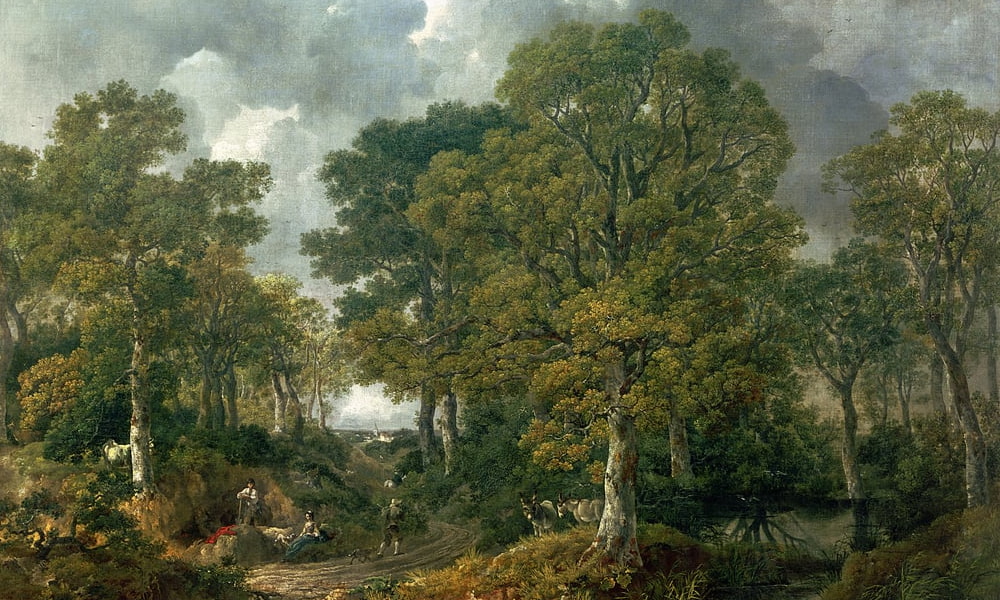
 c1748 - (MeisterDrucke-72993).jpg "Gainsborough")
 c1748 - (MeisterDrucke-72993).jpg)

 +43 4257 29415
 support@meisterdrucke.com
 Mo-Do: 7:00 - 16:00 | Fr: 7:00 - 13:00