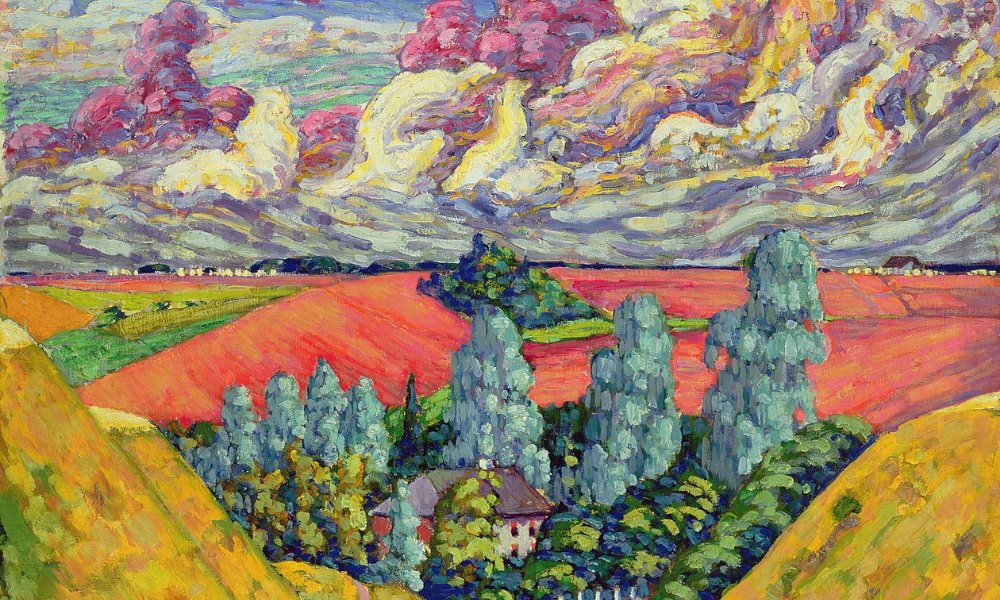
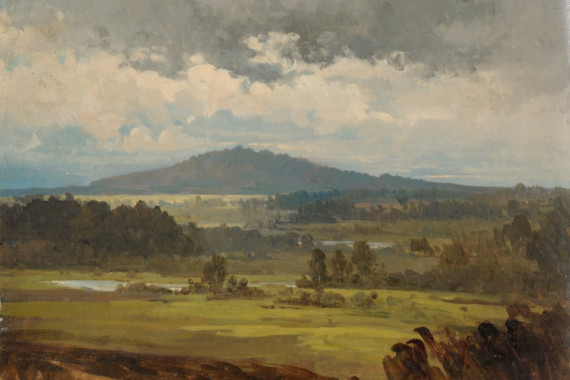
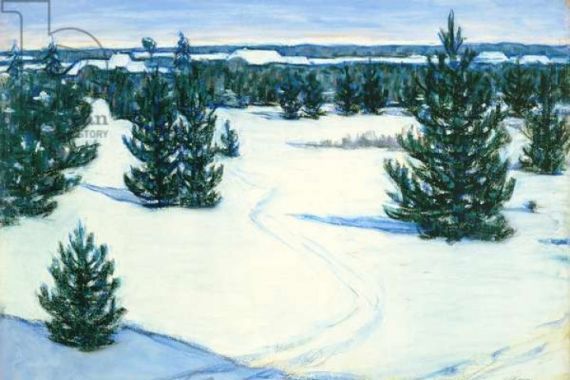
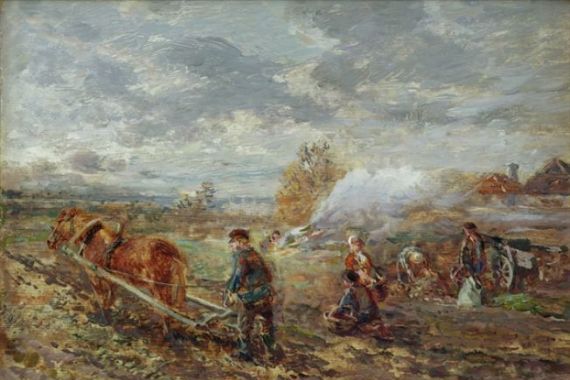
A single brushstroke on rough paper, a hint of mist over an endless moorland landscape - this is how the story of Estonian painting begins. If you want to understand Estonian art, you have to embark on a journey through light and shadow, through quiet forests and wide horizons, through the shimmering of the Baltic Sea and the flickering of candles on long winter nights. While 19th century French painting, for example, was characterised by urban bustle and social upheaval, Estonian art often remains quiet, almost meditative - and yet full of resilience. Here, nature is not just a backdrop, but a counterpart that constantly challenges and inspires the artists.
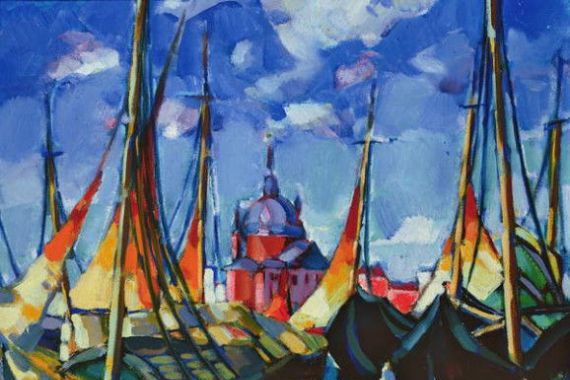
The themes that run through Estonian art are as clear and restrained as the country itself: the relationship between man and landscape, the interplay of light and darkness, the search for identity in the midst of a chequered history. Especially in the watercolours of Konrad Mägi, probably the most famous Estonian painter, the country shines in vibrant colours - his depictions of the island of Saaremaa are like windows into another world in which the light seems almost tangible. Mägi, who is often referred to as the "Estonian Cézanne", found his own language between Impressionism and Expressionism, but he always remained committed to the rhythm of Estonian nature. Unlike the works of his contemporaries from Germany or Russia, which are dominated by the pathos of the big city or the drama of history, Mägi and his successors emphasise the personal, the intimate, the quiet amazement.
A surprising detail: During the Soviet occupation, a lively scene of experimental graphic art and photography developed in Estonia that is hardly known in the West. Artists such as Jüri Arrak and Ilmar Malin utilised the possibilities of printmaking to convey subtle messages - between the lines, in fine lines and symbolic motifs. Photography became a means of self-assertion, a silent protest against the standardisation of art. In Peeter Tooming's black and white photographs, for example, you can sense the melancholy and hope of a people who want to preserve their independence. These works are not loud manifestations, but silent testimonies of courage and creativity - and they show how closely art and life are interwoven in Estonia.
Anyone strolling through the galleries of Tallinn or Tartu today will encounter an art that is aware of its roots and yet is always seeking new paths. Estonian painting, graphic art and photography are characterised by a deep sensitivity for the invisible, the unspoken - they invite you to take a closer look, to take your time, to listen to the quiet tones. In a world that is often dominated by garish images and quick impressions, Estonian art is an alternative: it is a whisper that lingers for a long time.
A single brushstroke on rough paper, a hint of mist over an endless moorland landscape - this is how the story of Estonian painting begins. If you want to understand Estonian art, you have to embark on a journey through light and shadow, through quiet forests and wide horizons, through the shimmering of the Baltic Sea and the flickering of candles on long winter nights. While 19th century French painting, for example, was characterised by urban bustle and social upheaval, Estonian art often remains quiet, almost meditative - and yet full of resilience. Here, nature is not just a backdrop, but a counterpart that constantly challenges and inspires the artists.
The themes that run through Estonian art are as clear and restrained as the country itself: the relationship between man and landscape, the interplay of light and darkness, the search for identity in the midst of a chequered history. Especially in the watercolours of Konrad Mägi, probably the most famous Estonian painter, the country shines in vibrant colours - his depictions of the island of Saaremaa are like windows into another world in which the light seems almost tangible. Mägi, who is often referred to as the "Estonian Cézanne", found his own language between Impressionism and Expressionism, but he always remained committed to the rhythm of Estonian nature. Unlike the works of his contemporaries from Germany or Russia, which are dominated by the pathos of the big city or the drama of history, Mägi and his successors emphasise the personal, the intimate, the quiet amazement.
A surprising detail: During the Soviet occupation, a lively scene of experimental graphic art and photography developed in Estonia that is hardly known in the West. Artists such as Jüri Arrak and Ilmar Malin utilised the possibilities of printmaking to convey subtle messages - between the lines, in fine lines and symbolic motifs. Photography became a means of self-assertion, a silent protest against the standardisation of art. In Peeter Tooming's black and white photographs, for example, you can sense the melancholy and hope of a people who want to preserve their independence. These works are not loud manifestations, but silent testimonies of courage and creativity - and they show how closely art and life are interwoven in Estonia.
Anyone strolling through the galleries of Tallinn or Tartu today will encounter an art that is aware of its roots and yet is always seeking new paths. Estonian painting, graphic art and photography are characterised by a deep sensitivity for the invisible, the unspoken - they invite you to take a closer look, to take your time, to listen to the quiet tones. In a world that is often dominated by garish images and quick impressions, Estonian art is an alternative: it is a whisper that lingers for a long time.
 ×
×







 Passionate Customer Service

 +43 4257 29415
 support@meisterdrucke.com
 Mo-Do: 7:00 - 16:00 | Fr: 7:00 - 13:00