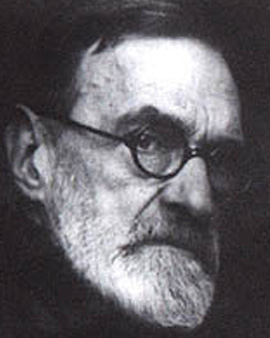
Pedro Figari is often compared with other Latin American artists such as Diego Rivera and Tarsila do Amaral, because he has rendered outstanding services to a new self-confidence of modern art in Latin America. For a long time, it had not been able to emancipate itself from the European tradition.
Even before studying painting, Figari made sketches in watercolours and oils, but it was only after a detour through a strongly Italian and academic phase that he found his way back to his naive style. Figari initially studied law and, as a trained criminal and civil defence lawyer, actively engaged himself in the cause of the poor. With his pictures he wanted to make his compatriots love precisely that which belonged to them in their homeland, even without great financial wealth. His paintings therefore mostly show scenes of traditional Uruguayan life such as the Bocia train, pampas or the local folklore dancers performing candombe.
Figari lived in France for almost ten years as a young man, then settled in Buenos Aires, became a Member of Parliament in Uruguay, Minister for Foreign Affairs in London and returned to Montevideo only shortly before his death. Figari always painted the pictures of his homeland from memory. His works of art are therefore less a documentation than a reconstruction of the life and country of the gauchos. Without wanting to reproduce the historical accuracy of a scene, Pedro Figari thus succeeded in portraying above all the emotional energy of the moment experienced.
 ×
×






 Passionate Customer Service

.jpg "Pericón by Pedro Figari")
.jpg)
.jpg "El Pericón by Pedro Figari")
.jpg)
.jpg "Dancing in the Patio by Pedro Figari")
.jpg)
.jpg "Creole Dancing by Pedro Figari")
.jpg)
 - (MeisterDrucke-240360).jpg "Creole Dance, before 1927 by Pedro Figari")
 - (MeisterDrucke-240360).jpg)
_-_(MeisterDrucke-890914).jpg "The Patio by Pedro Figari")
_-_(MeisterDrucke-890914).jpg)
.jpg "Gaucho Dance by Pedro Figari")
.jpg)
.jpg "Black Women at the Door or Black Women in the Entrance Hall by Pedro Figari")
.jpg)
.jpg "Pericón by Pedro Figari")
.jpg)
.jpg "The Pericón by Pedro Figari")
.jpg)
.jpg "Confidence by Pedro Figari")
.jpg)
.jpg "Lament by Pedro Figari")
.jpg)
.jpg "Pampa by Pedro Figari")
.jpg)
.jpg "Patio by Pedro Figari")
.jpg)
.jpg "Going for a Stroll by Pedro Figari")
.jpg)
.jpg "Confidence by Pedro Figari")
.jpg)
.jpg "The Gaucho Candioti by Pedro Figari")
.jpg)
.jpg "Pericón by Pedro Figari")
.jpg)
.jpg "Tertulia by Pedro Figari")
.jpg)
.jpg "Pericon by Pedro Figari")
.jpg)
.jpg "Candombe or Candombe under the Moon by Pedro Figari")
.jpg)
.jpg "The Brothers by Pedro Figari")
.jpg)
.jpg "The Patio or Unitarian Patio by Pedro Figari")
.jpg)
.jpg "Candombe by Pedro Figari")
.jpg)
.jpg "The Consultants by Pedro Figari")
.jpg)
_c_1935_(oil_on_board)_-_(MeisterDrucke-1316053).jpg "Preparando el candombe (Decoration), c. 1935 by Pedro Figari")
_c_1935_(oil_on_board)_-_(MeisterDrucke-1316053).jpg)
_Nostalgias_Africanas_(Candombe)_-_(MeisterDrucke-889897).jpg "African Nostalgia (Candombe) by Pedro Figari")
_Nostalgias_Africanas_(Candombe)_-_(MeisterDrucke-889897).jpg)
.jpg "The Colonial Minuet by Pedro Figari")
.jpg)
.jpg "Tea by Pedro Figari")
.jpg)
.jpg "Washerwomen in the Dunes or The Friends by Pedro Figari")
.jpg)
.jpg "Pampa by Pedro Figari")
.jpg)
.jpg "Arriving to Church by Pedro Figari")
.jpg)
.jpg "Self-Portrait by Pedro Figari")
.jpg)
.jpg "Colonial Meeting by Pedro Figari")
.jpg)
.jpg "Garden Under the Moon or Quiet in the Estate by Pedro Figari")
.jpg)
.jpg "Bocce Court by Pedro Figari")
.jpg)
.jpg "Differences by Pedro Figari")
.jpg)
_-_(MeisterDrucke-1647053).jpg "Dancing People: Candombe by Pedro Figari")
_-_(MeisterDrucke-1647053).jpg)
.jpg "The Kiss by Pedro Figari")
.jpg)
.jpg "The Arena by Pedro Figari")
.jpg)
.jpg "Pericón by Pedro Figari")
.jpg)
_-_(MeisterDrucke-635768).jpg "Off for the Honeymoon by Pedro Figari")
_-_(MeisterDrucke-635768).jpg)
.jpg "Dance at the Ranch by Pedro Figari")
.jpg)
_-_(MeisterDrucke-1126102).jpg "Los Mirinaques, c.1925 by Pedro Figari")
_-_(MeisterDrucke-1126102).jpg)
.jpg "Cabaret by Pedro Figari")
.jpg)
.jpg "The Gaucho Candioti by Pedro Figari")
.jpg)
.jpg "A Stagecoach by Pedro Figari")
.jpg)
.jpg "Patio by Pedro Figari")
.jpg)
.jpg "Consternation by Pedro Figari")
.jpg)
_-_(MeisterDrucke-892064).jpg "Manuelita Rosas by Pedro Figari")
_-_(MeisterDrucke-892064).jpg)
.jpg "The Stage-Coach, 1922 by Pedro Figari")
.jpg)
.jpg "To the Party by Pedro Figari")
.jpg)
.jpg "Piety by Pedro Figari")
.jpg)
.jpg "Creole Dance by Pedro Figari")
.jpg)
.jpg "Colonial Scene by Pedro Figari")
.jpg)
.jpg "Candombe by Pedro Figari")
.jpg)
.jpg "Dancers in Haiti by Pedro Figari")
.jpg)
.jpg "Recipe by Pedro Figari")
.jpg)
.jpg "Waiting for the Entrance by Pedro Figari")
.jpg)
.jpg "Encounter on the Way by Pedro Figari")
.jpg)
.jpg "House Recommendations to the Slave Queen by Pedro Figari")
.jpg)
_-_(MeisterDrucke-1725238).jpg "Dancing People: Candombe by Pedro Figari")
_-_(MeisterDrucke-1725238).jpg)
_-_(MeisterDrucke-156047).jpg "Black Dance by Pedro Figari")
_-_(MeisterDrucke-156047).jpg)
.jpg "Creole Dance, 1926 by Pedro Figari")
.jpg)
.jpg "Off for the Honeymoon by Pedro Figari")
.jpg)
.jpg "Tertulia by Pedro Figari")
.jpg)
.jpg "The Kiss by Pedro Figari")
.jpg)
.jpg "Pericón by Pedro Figari")
.jpg)
_-_(MeisterDrucke-892007).jpg "The Chacarera (Argentinian Folk Dance) by Pedro Figari")
_-_(MeisterDrucke-892007).jpg)
.jpg "Patio by Pedro Figari")
.jpg)
.jpg "Pampa by Pedro Figari")
.jpg)

 +43 4257 29415
 support@meisterdrucke.com
 Mo-Do: 7:00 - 16:00 | Fr: 7:00 - 13:00