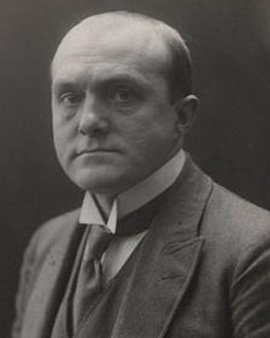
Heavy blue-gray clouds loom overhead, yet the painting remains clear and firm. Pressure and vastness, unrest and sharply defined form coexist without reconciliation in Seashore. Max Beckmann, whose life spanned the years 1884 to 1950, was a German painter and printmaker who worked precisely with this friction. His contours were emphatic, his fields of color often cool and angular; yet faces and bodies remained vulnerable. He smoothed nothing over. The light held its ground, but it did not dispel the threat. This tension explains why his pictures never seem merely decorative: they demand attention without loudly asking for it.
During the First World War, Beckmann volunteered as a medical orderly. He served first on the Eastern Front and later in Flanders. In 1915, he suffered a physical and psychological breakdown and was discharged from military service. This was not an art-historical footnote, but a turning point after which harshness and oppression acquired a different weight in his work. Even before the war, he had written in opposition to Franz Marc: "The laws of art are eternal and immutable, like the moral law within us." The sentence sounds severe, almost defiant. Beckmann rejected the label of Expressionism. Rather than conforming to a group, he sought a visual language in which solid form and disturbed experience could exist at the same time.
He later directed a master studio at the Städelschule in Frankfurt. During this period, he married Mathilde Kaulbach, the daughter of the painter Friedrich August von Kaulbach, whom he called Quappi. The pet name found its way into his work titles and made private intimacy visible. In Quappi in Pink Jumper, her hand rests against her cheek; the gesture feels intimate without becoming sentimental. In April 1933, the National Socialists dismissed him from the Städelschule. Four years later, more than 650 of his works were confiscated from German museums as "degenerate," and 21 were displayed in the Munich exhibition "Degenerate Art." The day after Hitler's opening speech for the Munich art exhibition, Beckmann left Germany for Amsterdam. He never returned.
He lived in Amsterdam for ten years. Exile did not mean quiet withdrawal here: Beckmann continued to work and observed himself with the same severity he imposed on other figures. From his youth onward, his self-portraits formed a continuous chronicle, from the young man to the émigré; Self-Portrait in a Tuxedo was part of this lifelong examination of his own appearance. Teaching posts then took him to the United States, to Washington University in St. Louis, to Boulder and Carmel, and finally to New York. Young Men by the Sea shows several naked bodies in different poses. Their presence brings together the blend of strength and vulnerability that preoccupied Beckmann time and again. Titles such as "Quappi in Blue in a Boat" or the mythological "Odysseus and Calypso" likewise connect specific figures with the open sea and older narratives.
Finally, Beckmann taught at the Brooklyn Museum. On December 27, he completed his ninth triptych. A few hours later, he suffered a heart attack on the street near Central Park West and died. Death came in the midst of his work, but there is no need to turn this into legend: until that day, he painted, tested forms, and applied colors. Even the title "The Iron Footbridge" brings together solid construction and dynamic urban space - a combination that suited him. His pictures hold the gaze with dark lines, compact fields, and precisely placed color contrasts. Behind them lies neither pleasing calm nor mere gloom. Beckmann allowed both to stand: the open coast and the heavy cloud, the secure outline and the vulnerable human being.
 ×
×







 Passionate Customer Service

.jpg "Seashore by Max Beckmann")
.jpg)
.jpg "Young Men by the Sea by Max Beckmann")
.jpg)
.jpg "Quappi in Pink Jumper by Max Beckmann")
.jpg)
.jpg "Dostoevsky II, 1921 by Max Beckmann")
.jpg)
.jpg "Quappi in Blue in a Boat by Max Beckmann")
.jpg)
.jpg "The Winding Path by Max Beckmann")
.jpg)
.jpg "Rugby Player by Max Beckmann")
.jpg)
.jpg "Self-Portrait in a Tuxedo by Max Beckmann")
.jpg)
.jpg "Landscape near Saint-Cyr-sur-Mer by Max Beckmann")
.jpg)
.jpg "The Iron Footbridge by Max Beckmann")
.jpg)
.jpg "The Bog at Moosberg by Max Beckmann")
.jpg)
.jpg "Odysseus and Calypso by Max Beckmann")
.jpg)
.jpg "Nollendorfplatz by Max Beckmann")
.jpg)
.jpg "Self-Portrait with Champagne Glass by Max Beckmann")
.jpg)
.jpg "Landscape with Seafood by Max Beckmann")
.jpg)
.jpg "View of Genoa: The Port of Genoa by Max Beckmann")
.jpg)
_lithograph_Germany_20th_century_-_(MeisterDrucke-1449483).jpg "The last ones, by Max Beckmann, lithograph. Germany, 20th century. by Max Beckmann")
_lithograph_Germany_20th_century_-_(MeisterDrucke-1449483).jpg)
_-_(MeisterDrucke-1342408).jpg "Large Still Life Interior (Blue) by Max Beckmann")
_-_(MeisterDrucke-1342408).jpg)
_-_(MeisterDrucke-1071202).jpg "Before the Costume Party (Three Women) by Max Beckmann")
_-_(MeisterDrucke-1071202).jpg)
_-_(MeisterDrucke-1071849).jpg "Self-portrait with Whip and Trumpet (Self-portrait as a Clown) by Max Beckmann")
_-_(MeisterDrucke-1071849).jpg)
.jpg "Self Portrait, from")
.jpg)
_-_(MeisterDrucke-1071533).jpg "Summer (Lovers) by Max Beckmann")
_-_(MeisterDrucke-1071533).jpg)
.jpg "Birth by Max Beckmann")
.jpg)
.jpg "Winter Landscape by Max Beckmann")
.jpg)
.jpg "Before the Masked Ball by Max Beckmann")
.jpg)
.jpg "Self-Portrait in the Hotel by Max Beckmann")
.jpg)
.jpg "Sea with Large Cloud by Max Beckmann")
.jpg)
.jpg "The Tight Rope Walkers, plate eight from Jahrmarkt by Max Beckmann")
.jpg)
.jpg "Lady with Mirror by Max Beckmann")
.jpg)
.jpg "Dance in Baden-Baden by Max Beckmann")
.jpg)
.jpg "Self-Portrait with Green Curtain by Max Beckmann")
.jpg)
_lithograph_Germany_20th_century_-_(MeisterDrucke-1454581).jpg "The Disappointed I by Max Beckmann")
_lithograph_Germany_20th_century_-_(MeisterDrucke-1454581).jpg)
.jpg "Violet Tulips by Max Beckmann")
.jpg)
.jpg "Departure by Max Beckmann")
.jpg)
.jpg "Girl by the Sea by Max Beckmann")
.jpg)
.jpg "In the Box by Max Beckmann")
.jpg)
.jpg "Untitled by Max Beckmann")
.jpg)
.jpg "Pompeii Clowns by Max Beckmann")
.jpg)
.jpg "Quappi with Parrot by Max Beckmann")
.jpg)
.jpg "Departure by Max Beckmann")
.jpg)
.jpg "Self-Portrait in the Bar by Max Beckmann")
.jpg)
.jpg "Street at Night by Max Beckmann")
.jpg)
.jpg "Café Bandol by Max Beckmann")
.jpg)
.jpg "Self-Portrait with Cigarette by Max Beckmann")
.jpg)
.jpg "Small Stormy Sea by Max Beckmann")
.jpg)
.jpg "Masquerade by Max Beckmann")
.jpg)
.jpg "The Sun Seekers by Max Beckmann")
.jpg)
.jpg "Christ in Limbo by Max Beckmann")
.jpg)
.jpg "Woman with Hat and Muff by Max Beckmann")
.jpg)
.jpg "Still Life with Cats by Max Beckmann")
.jpg)
.jpg "Portrait of Quappi in Green Jumper by Max Beckmann")
.jpg)
.jpg "Still Life with Green Glasses by Max Beckmann")
.jpg)
.jpg "Café Interior with Mirror by Max Beckmann")
.jpg)
.jpg "Turk")
.jpg)
.jpg "Portrait of Quappi on Pink and Violet by Max Beckmann")
.jpg)
.jpg "Two Girls Reading by Max Beckmann")
.jpg)
_lithograph_Germany_20th_century_-_(MeisterDrucke-1451750).jpg "The Disappointed II by Max Beckmann by Max Beckmann")
_lithograph_Germany_20th_century_-_(MeisterDrucke-1451750).jpg)
.jpg "Self-Portrait 1950 by Max Beckmann")
.jpg)
.jpg "Pensive Woman by the Sea by Max Beckmann")
.jpg)
.jpg "Mother with Playing Child by Max Beckmann")
.jpg)
.jpg "The Accused by Max Beckmann")
.jpg)
.jpg "Garden Landscape in Spring by Max Beckmann")
.jpg)
.jpg "Boulder Rock Landscape by Max Beckmann")
.jpg)
.jpg "Portrait of a Young Girl by Max Beckmann")
.jpg)
.jpg "Departure by Max Beckmann")
.jpg)
.jpg "Promenade des Anglais, Nice by Max Beckmann")
.jpg)
.jpg "Self-Portrait with Horn by Max Beckmann")
.jpg)
.jpg "View from Rupenhorn to the Havel by Max Beckmann")
.jpg)
.jpg "Seascape with Old Castle and Agaves by Max Beckmann")
.jpg)
.jpg "Still Life with Orange-Pink Orchids by Max Beckmann")
.jpg)
.jpg "View from the Ship")
.jpg)
.jpg "Quappi with Candle by Max Beckmann")
.jpg)
.jpg "Church in Marseille by Max Beckmann")
.jpg)
.jpg "Still Life with Green Candle by Max Beckmann")
.jpg)
.jpg "Plate 5 of the Series: Annual Fair by Max Beckmann")
.jpg)
.jpg "Plate 7 of the series: Annual Fair by Max Beckmann")
.jpg)
.jpg "The Spiritist Albert von Schrenck-Notzing by Max Beckmann")
.jpg)
.jpg "Plate 8 of the series: Annual Fair by Max Beckmann")
.jpg)
.jpg "Fridel Battenberg, Half Figure, Seated by Max Beckmann")
.jpg)
.jpg "Snake Lady, from The Annual Fair by Max Beckmann")
.jpg)
.jpg "Plate 10 of the Series: Annual Fair by Max Beckmann")
.jpg)
_-_(MeisterDrucke-1530999).jpg "Large Bridge (\"Eiserner Steg\" in Frankfurt am Main) by Max Beckmann")
_-_(MeisterDrucke-1530999).jpg)
.jpg "Hunger, plate 5 from the portfolio “Hell” by Max Beckmann")
.jpg)
.jpg "Plate 2 of the Series: Annual Fair by Max Beckmann")
.jpg)
.jpg "Half-Figure of a Woman with Hat and Veil, in Profile to the Right by Max Beckmann")
.jpg)
_-_(MeisterDrucke-1756827).jpg "Self-Portrait by Max Beckmann")
_-_(MeisterDrucke-1756827).jpg)
.jpg "Self-Portrait with Stylus, Plate 19 from \"Faces\" by Max Beckmann")
.jpg)
_-_(MeisterDrucke-1340927).jpg "Large Bridge (Eiserner Steg in Frankfurt am Main) by Max Beckmann")
_-_(MeisterDrucke-1340927).jpg)
.jpg "The Barker, from The Annual Fair by Max Beckmann")
.jpg)
.jpg "The Dance of Black People, plate nine from Jahrmarkt by Max Beckmann")
.jpg)
.jpg "The Murder by Max Beckmann")
.jpg)
.jpg "The Bowery by Max Beckmann")
.jpg)
.jpg "Reclining nude by Max Beckmann")
.jpg)
_-_(MeisterDrucke-1071199).jpg "Half-nude clown by Max Beckmann")
_-_(MeisterDrucke-1071199).jpg)
.jpg "The Letter, Reclining Half-Nude by Max Beckmann")
.jpg)
_Stilleben_mit_Fernrohr_und_verhuellter_Figur_-_(MeisterDrucke-1071781).jpg "Studio (Night). Still Life with Telescope and Veiled Figure by Max Beckmann")
_Stilleben_mit_Fernrohr_und_verhuellter_Figur_-_(MeisterDrucke-1071781).jpg)
.jpg "Plate 2 of the series: Annual Fair by Max Beckmann")
.jpg)
_Monte_Carlo_(Sudliche_Hafenstadt)_-_(MeisterDrucke-1452444).jpg "Monte Carlo (Southern Harbour) by Max Beckmann")
_Monte_Carlo_(Sudliche_Hafenstadt)_-_(MeisterDrucke-1452444).jpg)
.jpg "Murder by Max Beckmann")
.jpg)
_-_(MeisterDrucke-1711477).jpg "Study for the Portrait of Gottlieb Friedrich Reber (Head) by Max Beckmann")
_-_(MeisterDrucke-1711477).jpg)

 +43 4257 29415
 support@meisterdrucke.com
 Mo-Do: 7:00 - 16:00 | Fr: 7:00 - 13:00