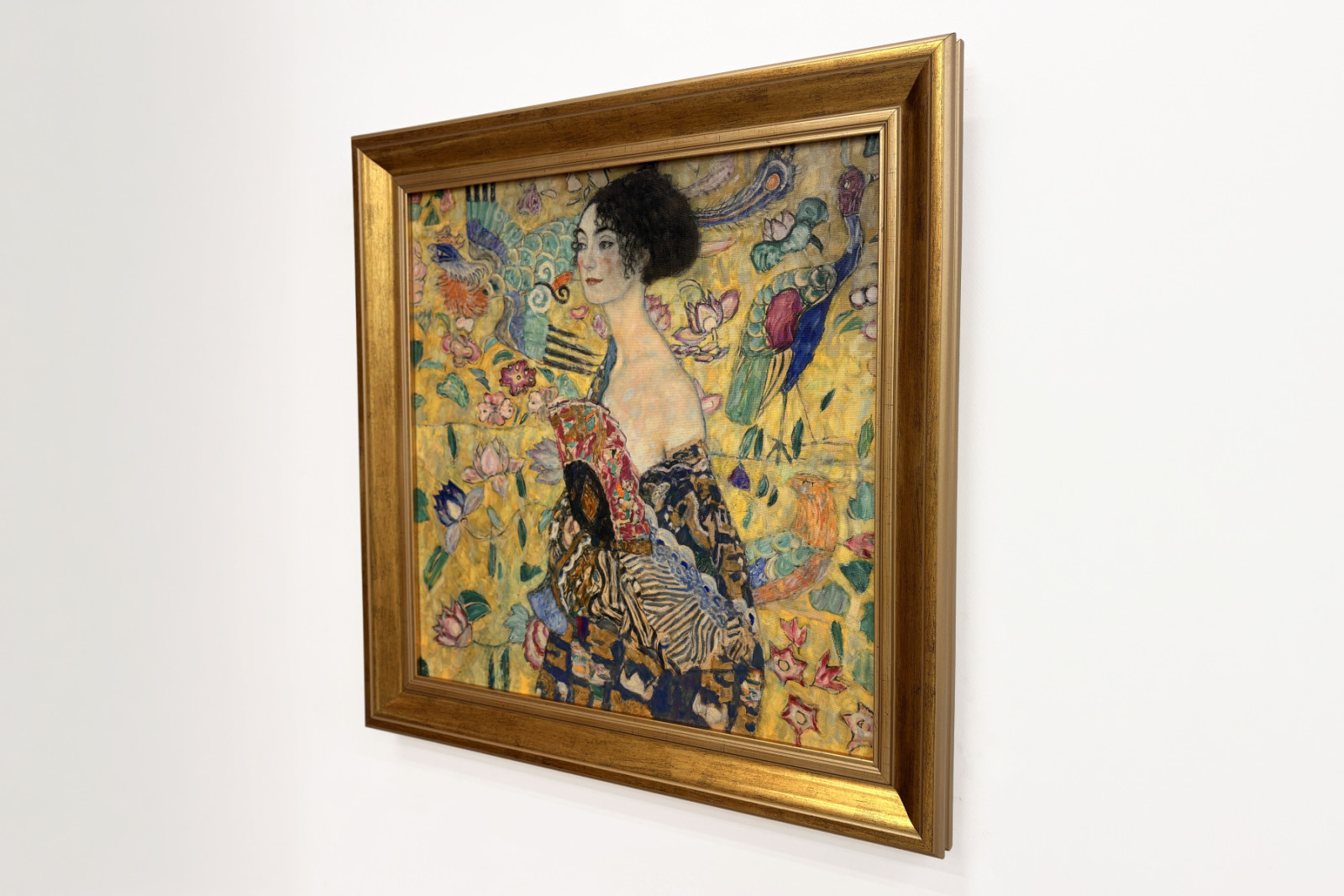
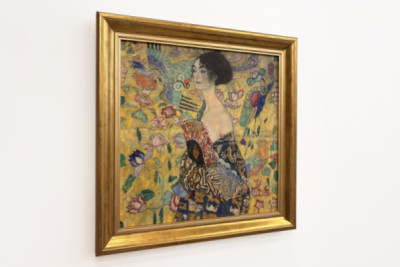
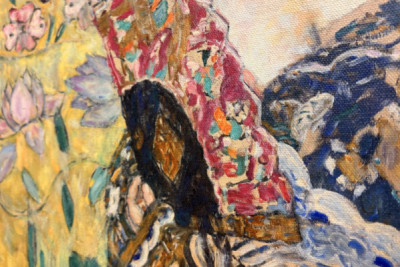
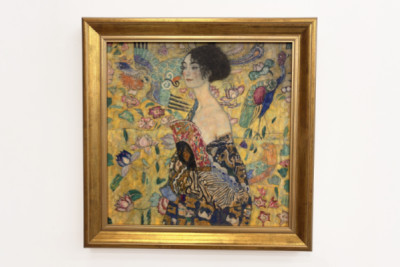
A soft glow sweeps across the yellow background as soon as you change your vantage point in front of the painting - the satin-finished surface of the Leonardo canvas does not reflect the light harshly, but allows it to glide across the surface. Against this backdrop stands a young woman in an open, patterned gown, a fan held before her chest, her head turned in profile. Around her, Gustav Klimt spreads out a world of flora and fauna, as he knew it from East Asian textiles: a phoenix with a long tail, a crane, lotus blossoms, all set against a luminous yellow background. Klimt painted the picture in 1917, the last year before his death, and it was still on the easel in his studio when he died in February 1918. His ‘golden phase’ lay long behind him by then; instead of gold leaf, it is the paint itself that carries the radiance here - applied more freely, more loosely, almost cheerfully.
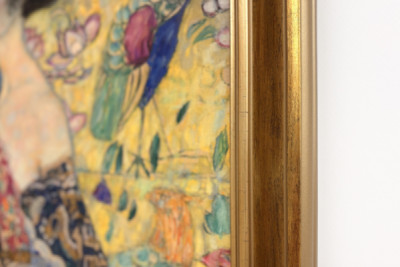
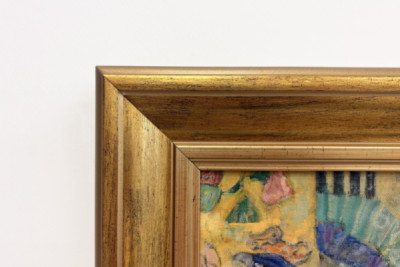
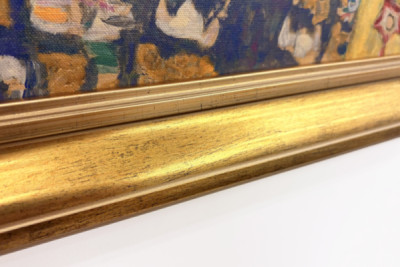
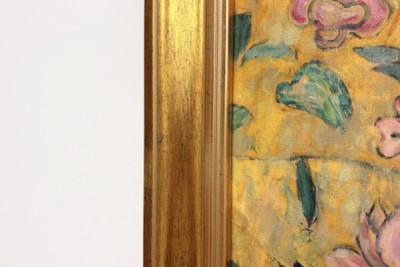
It is precisely this radiance that reveals the painting’s craftsmanship, without overdoing it. Viewed head-on, the picture surface remains calm and richly coloured; only when viewed from an angle does an even sheen settle over the yellow, whilst the dark blue sections of the robe remain more subdued - a difference one only really notices in passing, but then finds oneself seeking out time and again. The ‘Ava’ frame plays the same game by different means: its wide, arched gold moulding captures the room’s light as a long, warm band; in between, dark scratch marks in the gilding ensure that none of it appears new or smooth. Measuring 48 x 48 cm, the whole piece remains a concentrated square that takes up a surprising amount of wall space. The fact that this light, airy painting, of all things, is one of Klimt’s last lends it a certain conciliatory quality in retrospect - here it hangs without a trace of heaviness.
 ×
×






 +43 4257 29415
 support@meisterdrucke.com
 Mo-Do: 7:00 - 16:00 | Fr: 7:00 - 13:00