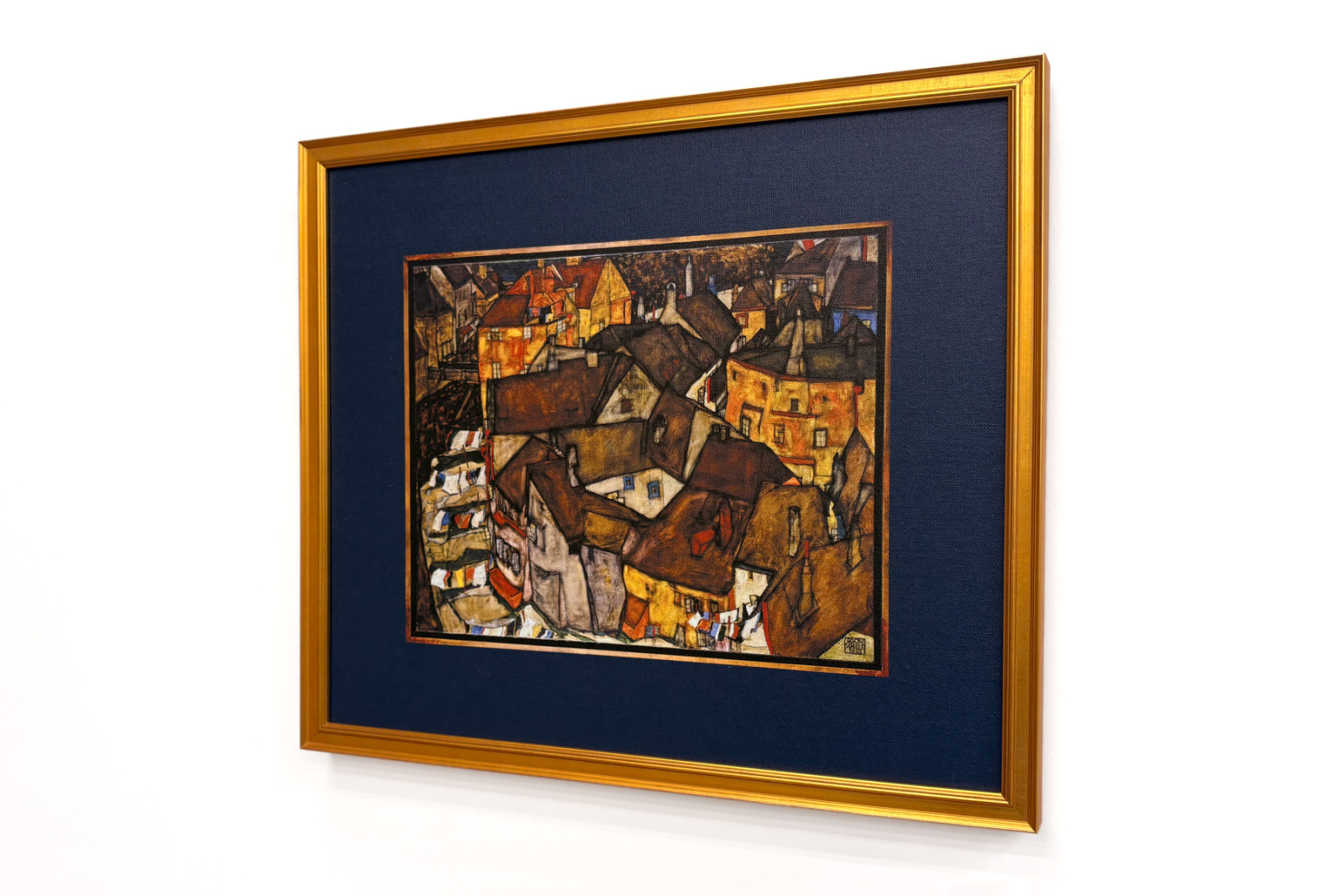
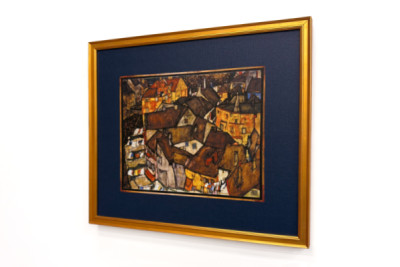
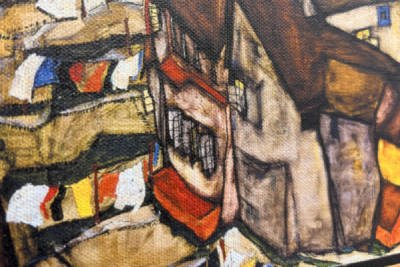
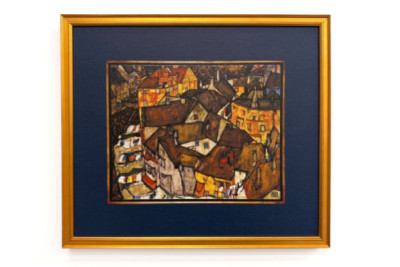
Laundry hangs on lines amongst the brown roofs, small splashes of colour in red, blue and yellow - almost the only thing that suggests movement in this densely packed town. In 1915, Egon Schiele painted the row of houses in Krumau from an elevated viewpoint, so that the gables and façades appear as surfaces wedged into one another &, outlined by his restless, dark lines. Krumau, now known as Český Krumlov, was his mother’s hometown and one of the most important places in his life and a major source of inspiration; he returned there time and again, painting the little town on the Vltava time and again. People are almost entirely absent, and yet the picture feels lived-in - the washing, the ochre-yellow walls, the windows like watchful eyes all tell of life that has just turned away. It is one of the most evocative cityscapes of Austrian Expressionism: melancholic, yet devoid of any sentimentality.
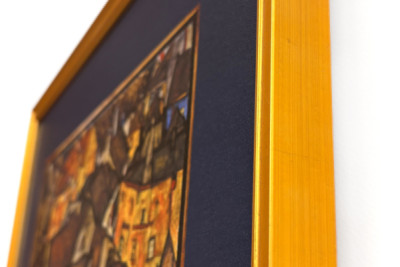
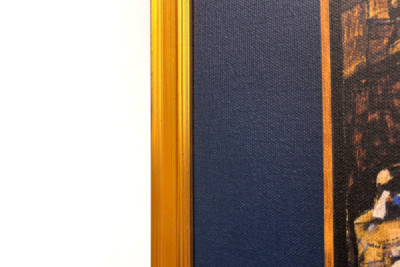
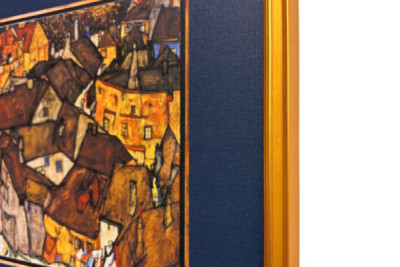
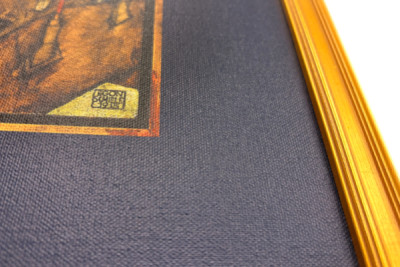
This reproduction renders the image on satin-finished canvas, and Schiele’s dry brushwork in particular is well worth a closer look. The fine grain of the fabric interacts with the mottled ochre and brown tones, as if the chalk of the original were actually resting on a rough surface. As your eye follows the edges of the roof, you can almost feel how the dark contours sit atop the texture. A deep blue border runs around the motif, printed directly onto the canvas and set off from the image by a narrow gold line - it takes on the role of a passe-partout and blends astonishingly naturally with Lena’s slender gold outline, which sets only the faintest boundary on the outside. Blue, gold, ochre. The composition appears as if cast from a single mould, and this compact piece appears significantly larger on the wall than its 30 x 24 cm dimensions would suggest.
 ×
× 





 +43 4257 29415
 support@meisterdrucke.com
 Mo-Do: 7:00 - 16:00 | Fr: 7:00 - 13:00