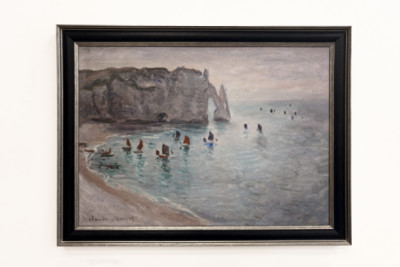
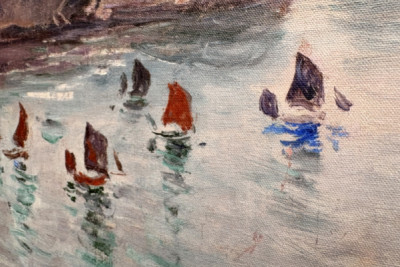
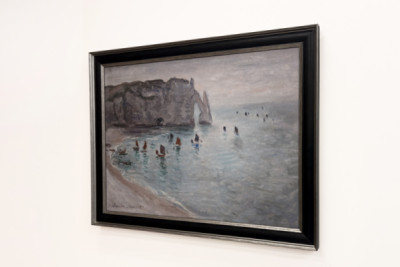
Claude Monet kept returning to Étretat time and again - the Normandy coast held a special appeal for him because nothing there ever stands still: The light, the weather and the sea change from hour to hour, and it is precisely such a moment that he captures in 1885. What I find particularly striking here is that the landscape does not appear still at all. The fishing boats are setting out; their dark red and brown sails stretch out in a loose chain across the shimmering water - and behind them stands the Porte d’Aval, that massive rock arch, in perfect tranquillity. Grey-violet hues in the sky, turquoise and off-white in the bay, along with the sails, which continue to sway as they are reflected in the water: Monet is not interested in the exact view of Étretat, but rather in the interplay of spray, mist and movement, which never appears the same twice.
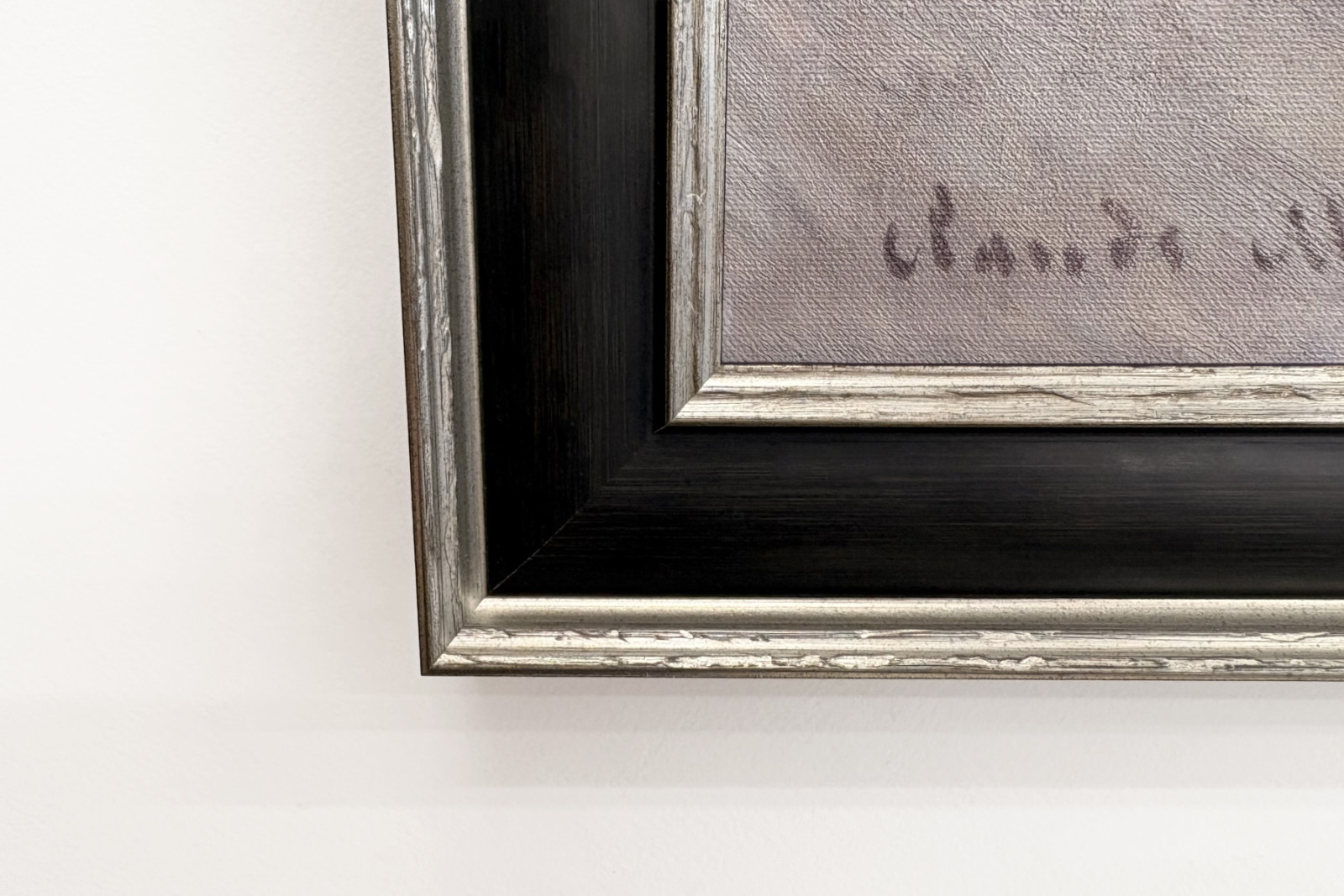
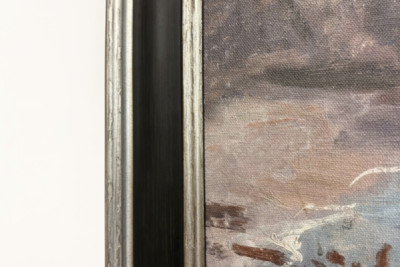
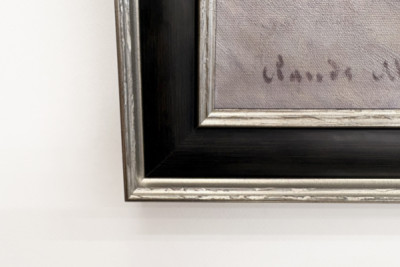
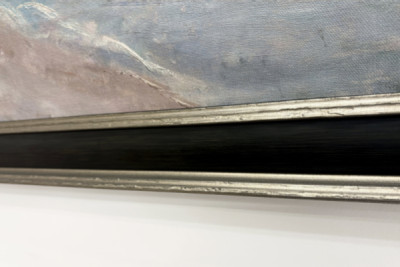
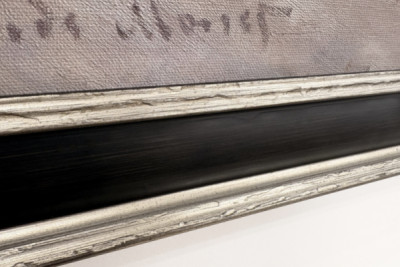
On the wall, the piece immediately makes its presence felt, even though it is not a large-scale work. This is down to Nunzia, the black solid wood frame: 49 mm wide, with two silvery-hatched profiled edges that frame the dark central area both inside and out. This robust frame provides a firm anchor for the misty coast - stepping back, the picture stands out clearly against the wall, almost like a window onto the grey canal sky. The picture surface, measuring 65 x 48 cm on satin-finished Leonardo canvas, sits directly within the profile without a passe-partout or glass; the black-edged side edge merges seamlessly into the frame. If you step closer, you’ll discover Monet’s signature softly imprinted on the canvas - and, like me, you may find yourself drawn to the impasto-like white streaks in the water, which can be traced individually.
 ×
×






 +43 4257 29415
 support@meisterdrucke.com
 Mo-Do: 7:00 - 16:00 | Fr: 7:00 - 13:00