Did you know that Lithuania was once considered the "Jerusalem of the North" Not because of its synagogues or religious diversity alone, but because here, in the narrow streets of Vilnius, artists and intellectuals from all over Europe flocked to be inspired by the unique atmosphere. I remember strolling through the old town as a young painter, observing the light on the pastel-coloured facades and feeling how history and the present merged in every brushstroke. In Lithuania, time doesn't seem to pass in a linear fashion - rather, it covers the landscapes, the people and the art like a fine mist.
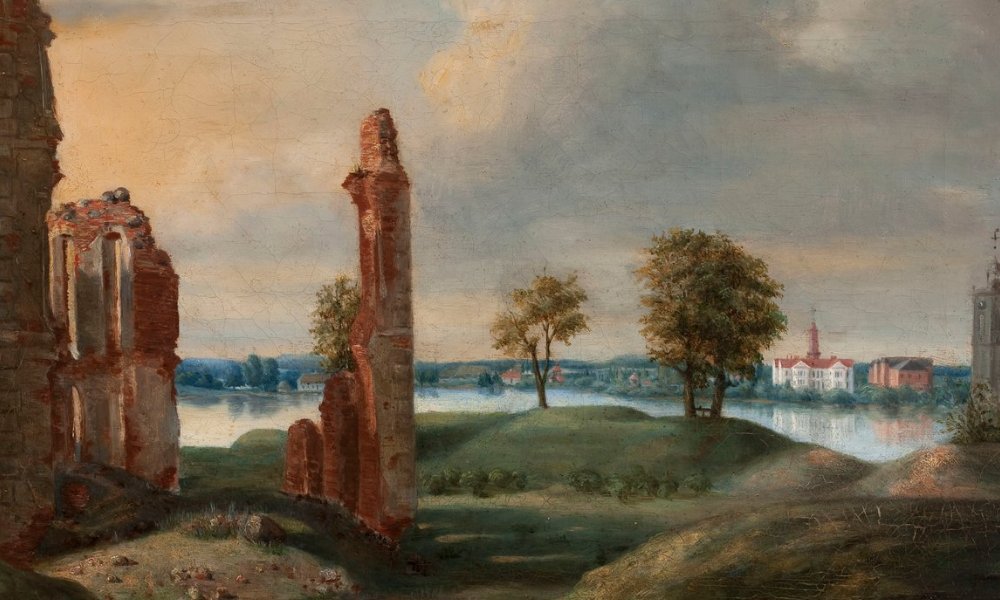
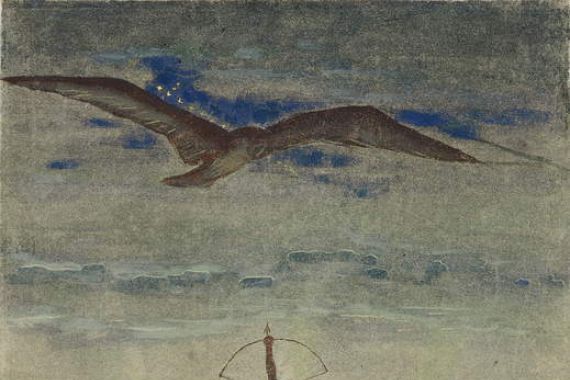
Lithuanian painting is a kaleidoscope of colours, emotions and the search for identity. While elsewhere in Europe the major schools and styles dominated, an art developed here that constantly balanced between East and West, between tradition and modernity. The watercolours of Mikalojus Konstantinas Čiurlionis, probably the most famous Lithuanian artist, in particular, reflect this turmoil: his works are like musical compositions on paper, full of mysterious landscapes reminiscent of dreams. Čiurlionis was not only a painter, but also a composer - his paintings almost sound as if you could hear them. And yet he is just one of many who have left their mark on Lithuanian art. The Lithuanian spirit lives on in the expressive portraits of Antanas Samuolis, for example, in the subtle colour moods of Petras Kalpokas or in the socially critical graphics of Vincas Kisarauskas: always a little melancholy, always in search of their own place in the world.
A particularly fascinating chapter in Lithuanian art history begins with photography. While photography was long regarded as a mere craft in Western Europe, in Lithuania it was celebrated early on as an art form in its own right. In the second half of the 20th century, the legendary "Lithuanian School of Photography" produced artists whose black and white photographs captured everyday life with a poetic depth that was unrivalled. Antanas Sutkus, for example, portrayed children, farmers and intellectuals with an empathy that goes far beyond the documentary. His pictures are windows into a world that vacillates between hope and resignation - which is precisely why they are so touching. Lithuanian printmaking, on the other hand, such as the experimental works of Vytautas Valius, testifies to an irrepressible desire to experiment and play with forms and techniques.
Lithuanian art is like a river that makes its way through changing landscapes: sometimes calm and reflective, sometimes wild and turbulent. It tells of longing, of resistance, of the beauty of the everyday - and of what it is like to live between worlds. Anyone who engages with this art discovers not just a country, but a whole world of colours, lines and stories that are waiting to be seen again and again.
Did you know that Lithuania was once considered the "Jerusalem of the North" Not because of its synagogues or religious diversity alone, but because here, in the narrow streets of Vilnius, artists and intellectuals from all over Europe flocked to be inspired by the unique atmosphere. I remember strolling through the old town as a young painter, observing the light on the pastel-coloured facades and feeling how history and the present merged in every brushstroke. In Lithuania, time doesn't seem to pass in a linear fashion - rather, it covers the landscapes, the people and the art like a fine mist.
Lithuanian painting is a kaleidoscope of colours, emotions and the search for identity. While elsewhere in Europe the major schools and styles dominated, an art developed here that constantly balanced between East and West, between tradition and modernity. The watercolours of Mikalojus Konstantinas Čiurlionis, probably the most famous Lithuanian artist, in particular, reflect this turmoil: his works are like musical compositions on paper, full of mysterious landscapes reminiscent of dreams. Čiurlionis was not only a painter, but also a composer - his paintings almost sound as if you could hear them. And yet he is just one of many who have left their mark on Lithuanian art. The Lithuanian spirit lives on in the expressive portraits of Antanas Samuolis, for example, in the subtle colour moods of Petras Kalpokas or in the socially critical graphics of Vincas Kisarauskas: always a little melancholy, always in search of their own place in the world.
A particularly fascinating chapter in Lithuanian art history begins with photography. While photography was long regarded as a mere craft in Western Europe, in Lithuania it was celebrated early on as an art form in its own right. In the second half of the 20th century, the legendary "Lithuanian School of Photography" produced artists whose black and white photographs captured everyday life with a poetic depth that was unrivalled. Antanas Sutkus, for example, portrayed children, farmers and intellectuals with an empathy that goes far beyond the documentary. His pictures are windows into a world that vacillates between hope and resignation - which is precisely why they are so touching. Lithuanian printmaking, on the other hand, such as the experimental works of Vytautas Valius, testifies to an irrepressible desire to experiment and play with forms and techniques.
Lithuanian art is like a river that makes its way through changing landscapes: sometimes calm and reflective, sometimes wild and turbulent. It tells of longing, of resistance, of the beauty of the everyday - and of what it is like to live between worlds. Anyone who engages with this art discovers not just a country, but a whole world of colours, lines and stories that are waiting to be seen again and again.
 ×
×





 Passionate Customer Service


 +43 4257 29415
 support@meisterdrucke.com
 Mo-Do: 7:00 - 16:00 | Fr: 7:00 - 13:00