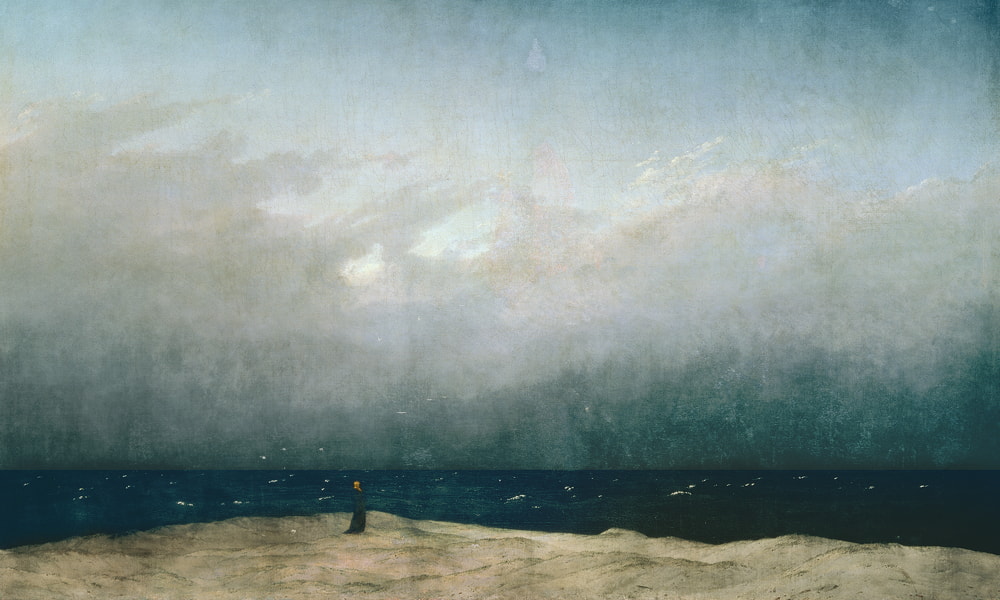
"When I see the light in the morning, dancing over the cliffs and turning the spray into a fine veil of mist, I know that no studio in the world can offer me this palette." This is how the day begins for an artist on Guernsey, the small Channel Island that lies between England and France and yet forms a world of its own. Unlike the harsh, often melancholy light of Brittany or the rich colours of the English countryside, the light on Guernsey has a peculiar clarity - almost as if someone had placed a filter of mother-of-pearl over the sky and sea. It is this light that has attracted and inspired painters, draughtsmen and photographers for centuries.
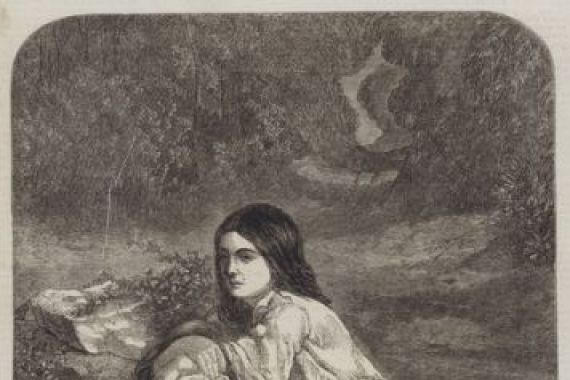
Guernsey is not a land of great art academies or famous museums, but a place where art often flourishes in secret - in sketchbooks, on small canvases, in studios hidden away in fishermen's cottages. The island's art history is closely interwoven with its nature and its chequered history. While major movements such as Impressionism and Surrealism caused a furore on the European mainland, artists on Guernsey found their own ways of capturing the ephemeral: Watercolours that capture the play of light and water, delicate drawings of rocks that rise out of the sea like ancient faces, and gouaches that blend the lush green of the meadows with the deep blue of the Atlantic. The island's unique character is particularly evident in the photography: the famous photographs by T. F. Priaulx, for example, which document everyday life on Guernsey, are silent testimonies to a world that is slowly changing and yet remains preserved in its images.
A surprising detail: During the German occupation in the Second World War, artistic creation on Guernsey was by no means stifled - on the contrary, it flourished in secret. Artists such as Peter Le Lievre, who was actually known as a businessman, created impressive drawings and watercolours during this time that captured life under occupation, often with a subtle, almost subversive humour. These works are of inestimable value today, not only artistically but also historically. And then there is Victor Hugo, the famous French writer who lived on Guernsey during his exile and devoted himself not only to literature but also to drawing - his mysterious ink drawings, created in the semi-darkness of his study, are a fascinating testimony to the combination of word and image.
Anyone strolling through the alleyways of St Peter Port today will sense that art on Guernsey is never loud, but always present. It can be found in the small galleries, in the windows of the houses, in the hands of people who always want to see and capture their island anew. Guernsey is a place where art is not just seen, but lived - a silent but powerful echo of the landscape, the history and the people who characterise it. For art lovers and print enthusiasts, Guernsey is an insider's tip: here, works are created that capture the light, the silence and the stories of a unique island - and which, once seen, will never be forgotten.
"When I see the light in the morning, dancing over the cliffs and turning the spray into a fine veil of mist, I know that no studio in the world can offer me this palette." This is how the day begins for an artist on Guernsey, the small Channel Island that lies between England and France and yet forms a world of its own. Unlike the harsh, often melancholy light of Brittany or the rich colours of the English countryside, the light on Guernsey has a peculiar clarity - almost as if someone had placed a filter of mother-of-pearl over the sky and sea. It is this light that has attracted and inspired painters, draughtsmen and photographers for centuries.
Guernsey is not a land of great art academies or famous museums, but a place where art often flourishes in secret - in sketchbooks, on small canvases, in studios hidden away in fishermen's cottages. The island's art history is closely interwoven with its nature and its chequered history. While major movements such as Impressionism and Surrealism caused a furore on the European mainland, artists on Guernsey found their own ways of capturing the ephemeral: Watercolours that capture the play of light and water, delicate drawings of rocks that rise out of the sea like ancient faces, and gouaches that blend the lush green of the meadows with the deep blue of the Atlantic. The island's unique character is particularly evident in the photography: the famous photographs by T. F. Priaulx, for example, which document everyday life on Guernsey, are silent testimonies to a world that is slowly changing and yet remains preserved in its images.
A surprising detail: During the German occupation in the Second World War, artistic creation on Guernsey was by no means stifled - on the contrary, it flourished in secret. Artists such as Peter Le Lievre, who was actually known as a businessman, created impressive drawings and watercolours during this time that captured life under occupation, often with a subtle, almost subversive humour. These works are of inestimable value today, not only artistically but also historically. And then there is Victor Hugo, the famous French writer who lived on Guernsey during his exile and devoted himself not only to literature but also to drawing - his mysterious ink drawings, created in the semi-darkness of his study, are a fascinating testimony to the combination of word and image.
Anyone strolling through the alleyways of St Peter Port today will sense that art on Guernsey is never loud, but always present. It can be found in the small galleries, in the windows of the houses, in the hands of people who always want to see and capture their island anew. Guernsey is a place where art is not just seen, but lived - a silent but powerful echo of the landscape, the history and the people who characterise it. For art lovers and print enthusiasts, Guernsey is an insider's tip: here, works are created that capture the light, the silence and the stories of a unique island - and which, once seen, will never be forgotten.
 ×
× 






 Passionate Customer Service

 +43 4257 29415
 support@meisterdrucke.com
 Mo-Do: 7:00 - 16:00 | Fr: 7:00 - 13:00