support@meisterdrucke.com  ·  0043 4257 29415

Deutsch English Italiano Español Français Nederlands Português Svenska Polski Dansk
Search by artist, work title or style – e.g. Monet, Starry Night, Impressionism, Hokusai wave, nude. Describe the scene – e.g. green meadow, abstract with lots of red, dark oil painting, standing nude next to a tree.

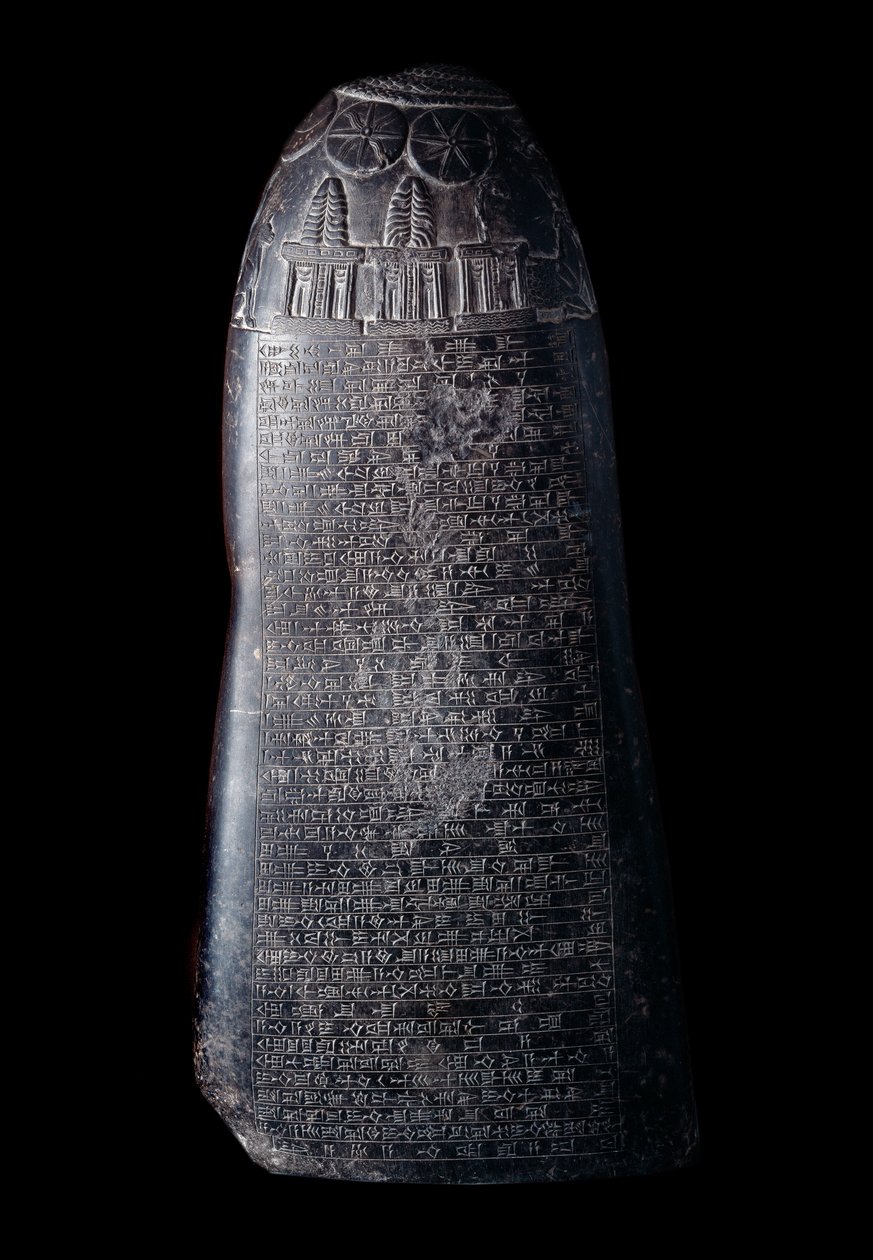
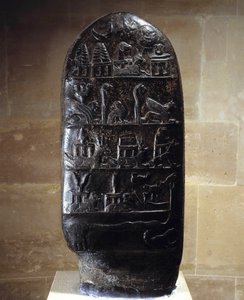
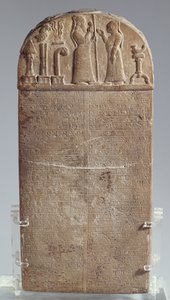
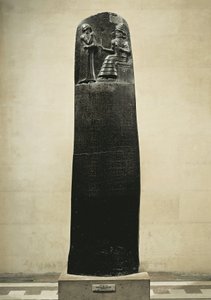
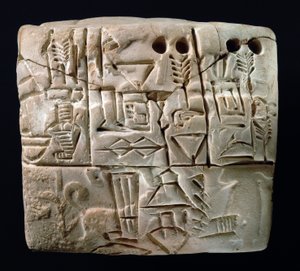
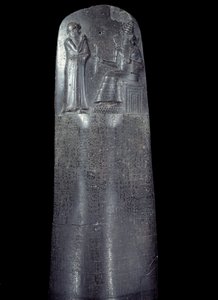
Mesopotamia: kudurru in black limestone by King Marduk-sapik-zari (1082-1070 BC) (stele used as a record of donations of land made by the Kassite rulers of Babylon to family members or high dignitaries). The inscription is in cuneiform by Mesopotamian Mesopotamian

Mesopotamia: kudurru in black limestone by King Marduk-sapik-zari (1082-1070 BC) (stele used as a record of donations of land made by the Kassite rulers of Babylon to family members or high dignitaries). The inscription is in cuneiform

(Mesopotamia: kudurru in black limestone by King Marduk sapik zari (Marduk-sapik-zari) (1082-1070 BC) (stele used as a support for donations of land made by the Kassite rulers of Babylon to family members or high dignitaries). The inscription is in cuneifor)


Mesopotamian Mesopotamian

€ 133.83
Tax-free
   Configure art print
Undated  ·  Image ID: 999256

Nonclassified artists

Mesopotamia: kudurru in black limestone by King Marduk-sapik-zari (1082-1070 BC) (stele used as a record of donations of land made by the Kassite rulers of Babylon to family members or high dignitaries). The inscription is in cuneiform by Mesopotamian Mesopotamian. Available as an art print on canvas, photo paper, watercolor board, natural paper, or Japanese paper.
Iraq Museum, Baghdad / Bridgeman Images
AR/3D   View in 3D / AR zu Favoriten hinzufügen   Add to favorites    Change wall color    View picture in a room
0 Reviews

Configure art print

Picture Frame

Medium & Stretcher

Glass & Passepartout

Miscellaneous & Extras

 Save / compare configuration
Preview Icon

Summary

Gemälde
Veredelung
Keilrahmen
Museumslizenz

€ 133.83
(inkl. 20% MwSt)
   Add to cart

Bildschärfe: PERFEKT

If you'd like us to adjust the brightness, colors, or crop the image, we're happy to do this for you at no extra cost. Just get in touch!

Similar artworks selected for you

Mesopotamia: diorite stele of the Code of Laws of Hammurabi (or Hammourabi). It is covered with cuneiform inscriptions and at the top King Hammurabi stands before the sun god of Mesopotamia, Shamash, divinity of Justice. It is one of the oldest pieces Cone of Urukagina (Clay, c. 2350 BC) Code of Hammurabi: the God Shamash Dictating His Laws to Hammurabi, King of Babylon, Found at Susa, Iran, c. 1750 BC Kudurru of King Melishikhu II depicting Babylonian emblems, from Susa Diorite Stele Inscribed with the Laws of Hammurabi, 18th Century BC Sumerian Art: Detail of the Statue of Gudea, Prince of Lagash, called “with the gushing vase”, and dedicated to the goddess Geshtinanna - Sculpture in dolerite from Tello (Girsu in Mesopotamia), around 2120 BC, Height: 62 cm, Width: 25,60 cm - Paris, Musée Oriental antiquity: stele (or kudurru, record of a land grant) in black limestone carved with bas-reliefs of King Meli-Shipak (or Melishipak) II (1186-1172 BC) in favor of his son Marduk-apla-iddina. They represent the great deities. From the site of Su A Religious Text in Praise of King Sargon and King Naram-Sin of Akkad Baked Clay Prism (“Weld-Blundell Prism”) with the Sumerian King List giving rulers from “before the Flood” to King Sin-magir of Isin (c. 1827-17 BC), inscribed in cuneiform script, probably from Larsa Baked clay prism (‘Weld-Blundell Prism’) with the Sumerian King List giving rulers from ‘before the Flood’ to King Sin-magir of Isin (c. 1827-17 BC), inscribed in cuneiform script, probably from Larsa Cuneiform tablet, c.2300 BC Baked Clay Prism ( Mesopotamia: kudurru (stele used as a record of land donations made by the Kassite rulers of Babylon to family members or high dignitaries. The inscription is in cuneiform writing. The text is an account of military and administrative services) Prehistoric Tablet with Multiplication Table Foundation tablet commemorating the restoration of the temple of Ningirsu built by Gudea, Prince of Lagash, Mesopotamian, c.2150 BC Clay tablet with cuneiform script on both sides Hittite civilization: cuneiform tablet transcribing the Ritual of Amihatna, high priest of the deity Ishara, from the site of Hattusa, present-day Bogazköi, 1650-1200 BC. Istanbul Archaeological Museum Hexagonal cylinder, inscribed with the Annals of Esarhaddon King of Assyria, c.676 BC Cuneiform tablet: private letter, c. 20th-19th century BC Kuddurru (charter for a grant of land) of the Babylonian King Marduk-zakir-shumi, Iran, Late Assyrian Period, c.850 BC Purchase of a Slave by Lugal-Ushumgal, Prince of Lagash, Vassal of Naram-Sin Cippus Code of Hammurabi: the god Shamash dictating his laws to Hammurabi, King of Babylon, found at Susa, Iran, c. 1750 BC Victory Stela of Merenptah Tablet written in Babylonian cuneiform syllabary from the ruins of ancient Ugarit (modern Ras Shamra) A Large Multi-Columned Ur III Tablet Concerning Itemised Livestock for Sacrifice Terracotta Tablet from the Nestor Palace Archives in Pylos (Detail) Vase, from Uruk (now Warka, Iraq), 3rd millennium BC Lower Half of the Diorite Statue of Manishtusu
Show more similar artworks

More art prints by Mesopotamian Mesopotamian

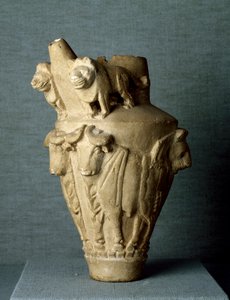
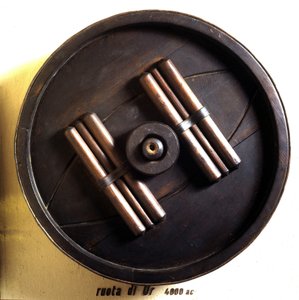
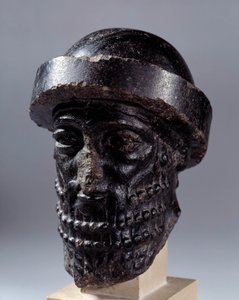
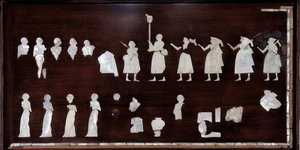
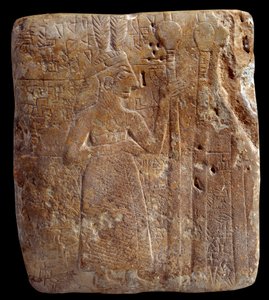
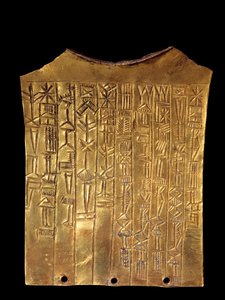
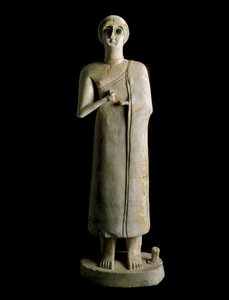
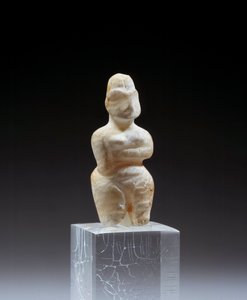
Mesopotamian art: ritual limestone vase with bulls and lions. Sun. H. 30.2 cm. From the site of Uruk (or Uruk), Iraq. Baghdad, Archaeological Museum Discovery of the wheel in Ur (Mesopotamia), 4000 BC Mesopotamian Art: Statue of the Intendant Ebih-il. Sculpture of alabaster, shell, lapis lazuli and schist, around 2500 BC (Sumerian period, around 2900-2200 BC). From Mari. Height: 0.525 m. Mesopotamia: head carved in diorite called Hammurabi. From Susa. Dimensions 0.15 x 0.1 m. Paris, Louvre Museum Mesopotamia: mosaic elements of Mari’s banner in bitumen, shell and stone. Approx. 3500 BC. From the temple of Ishtar of Mari. Sun, 0.53 x 0.72 m. Paris, Musée du Louvre Mesopotamia. Sumerian art: figure with feathers (circa 2700 BC), stele from ancient Girsu, archaic Sumerian period - limestone. Paris, Musée du Louvre Oriental Art: Vase with geometric decoration in Halaf style, terracotta, around 4500 BC. Mesopotamia or northern Syria. Paris, Musée du Louvre Mesopotamia: gold votive plate in the shape of a beard dedicated to the god Sara. It is covered with a cuneiform inscription. From Ummah. 2370 BC. Paris, Louvre Museum Mesopotamian art: figurine of a woman or goddess. Terracotta, 3rd millennium BC. From Tell Asmar (Ehnunna in Mesopotamia). H. 59 cm. Museum of Baghdad, Iraq Mesopotamia: female alabaster statuette from the necropolis of Tell es-Sawwan. 5800-5500 BC. Paris, Louvre Museum Early pictographic cuneiform tablet, Mesopotamia, Uruk, c. 3100-2900 BC Mesopotamia: maritime scene representing the transport of timber to Lebanon. Detail of an alabaster low relief from Khorsabad. Reign of Sargon II. 710 BC. Paris, Louvre Museum Mesopotamia: Eagle with lion Mesopotamia: kudurru (stele used as a record of land donations made by the Kassite rulers of Babylon to family members or high dignitaries. The inscription is in cuneiform writing. The text is an account of military and administrative services) Figurine of a nude woman, Mesopotamia, c. 2000-1800 BC
Show more works by Mesopotamian Mesopotamian

A selection of our top sellers

Head of a Young Woman with Tousled Hair or Leda P. Mönsted, Sunny Forest Stream Winter Landscape, 1835-8 Little Heath Princess. 1889 Praying Hands A stroll on the beach The Grand Canal, Venice, Looking Southeast, with the Campo della Carità to the Right, 1730s. Most Sacred Keelmen Heaving in Coals by Moonlight The Soul of the Rose, 1908 After Bathing Young Girl Reading, c.1770 Native birds, including the Toucan (centre), Amazon, Brazil, from Napoleon I Bonaparte (1769-1821) studying at the Royal Military School of Brienne (a school run by the Minimes in Aube, Champagne-Ardenne). His shadow falls on the geographical map of Europe. Illustration by Jacques Marie Gaston Onfray de Breville, known View of Vétheuil. 1880
Show more artworks


What our customers think about us


Frequently Asked Questions about Meisterdrucke


Personalizing your art print at Meisterdrucke is simple and intuitive: Choose a frame, set the image size, pick a printing medium, and add suitable glazing or a stretcher frame. We also offer additional customization options like mats, fillets, and spacers. If you have any questions, our customer service team is ready to help you create your perfect artwork.

At Meisterdrucke, you can visualize your configured artwork directly in your own room. Simply upload a photo of your space and see how the artwork looks in it. If you're visiting us on a mobile device — phone or tablet — our augmented reality feature brings the picture to life and projects it right into your room. A unique experience that combines art and technology.

Choosing the right medium is often a matter of personal taste. To give you a better idea, we've provided some images for each medium. We also offer a sample set of all paper variants, so you can decide not just visually but by touch as well. You can order the sample set free of charge — only shipping costs apply.

Don't worry! At Meisterdrucke, we don't just process orders mechanically. Every order is manually reviewed by our team. If we spot any inconsistencies or issues with your configuration, we'll get in touch with you right away. And of course, our friendly and patient support team is always here to help you with your configuration. We'll work with you by phone or email to adjust your image so the final result is exactly what you had in mind.


Still have questions?

Are you interested in an art print from our manufactory but still unsure? Do you need advice on choosing the medium or help with the order?

Our experts are happy to assist you.

+43 4257 29415
support@meisterdrucke.com

Mo-Do: 7:00 - 16:00 | Fr: 7:00 - 13:00

Still have questions?

Are you interested in an art print from our manufactory but still unsure? Do you need advice on choosing the medium or help with the order?

Our experts are happy to assist you.

+43 4257 29415
support@meisterdrucke.com
Mo-Do: 7:00 - 16:00 | Fr: 7:00 - 13:00


Meisterdrucke

   Kärntner Strasse 46
        9586 Finkenstein am Faaker See
        Austria
        +43 4257 29415
        support@meisterdrucke.com
Other languages

                   
Erfahrungen & Bewertungen zu Meisterdrucke
Post.at DHL Express Quehenberger Cargoboard
Kaiser Franz Joseph

Meisterdrucke
Kärntner Strasse 46
9586 Finkenstein am Faaker See · Austria
+43 4257 29415 · support@meisterdrucke.com
Post.at DHL Express Quehenberger Cargoboard


(c) 2026 meisterdrucke.uk