support@meisterdrucke.com  ·  0043 4257 29415

Deutsch English Italiano Español Français Nederlands Português Svenska Polski Dansk
Search by artist, work title or style – e.g. Monet, Starry Night, Impressionism, Hokusai wave, nude. Describe the scene – e.g. green meadow, abstract with lots of red, dark oil painting, standing nude next to a tree.
Feel the passion of Jacques Callot in our art prints.

Our art reproductions bring moments of comfort and joy right into your home.


Discover artworks now!
Österreichische Kunstmanufaktur Erfahrungen & Bewertungen zu Meisterdrucke auf ProvenExpert.com
Jacques Callot
Passionate Customer Service
Museum Quality Art Prints
Individual Customization Options
Österreichische Kunstmanufaktur Passionate Customer Service
Museum Quality Art Prints
Individual Customization Options

Jacques Callot

France · 1592–1635 · Nonclassified artists · 3591 artworks found
Our art reproductions bring moments of comfort and joy right into your home. more about the artist
Jacques Callot
1592–1635
Born1592 (Nancy)
Died1635 (Nancy)
NationalityFrance
Professiongraphic artist, painter, etcher, draftsperson, engraver, copper engraver
TeacherPhilippe Thomassin, Jacques Bellange, Israël Henriet
StudentFrançois Collignon
Notable worksBeggar with Dog, from Les Gueux (The Beggars) (1623), Les Grandes Miseres de la Guerre: L'Arquebusade (1632), Les Grandes Miseres de la Guerre: L'enrolement des Troupes (1632), The Temptation of St. Anthony (1700)
MuseumsArt Institute of Chicago, ETH Graphische Sammlung, National Gallery of Art, Cleveland Museum of Art, Princeton University Art Museum

Jacques Callot

Even in his youth, Jacques Callot was a restless spirit. His hometown of Nancy was still an insignificant provincial town that still had its great heyday ahead of it. Twice he left his parents' home in order to be able to realize his dream of becoming an artist somewhere else. Remorsefully, he returned home each time and began an apprenticeship as a goldsmith. No sooner had this been completed than he was drawn to faraway Rome. He got a job with Philippe Thomassin, one of the most renowned engravers of his time, like Jacques Callot a migrant from the east of France. He learned quickly and much, but Rome was not the hub of the artistic world in the 17th century and he sought a new challenge in Florence. There he refined his etching technique in the workshops and studios of local masters Giulio Parigi and Antonio Tempestas.

No less a person than the legendary Cosimo II de' Medici encouraged the young talent from Nancy. Jacques Callot received an abundance of commissions from the famous princely house and earned very, very much money for the time. He was allowed to work completely freely and looked for his own motifs. He was particularly interested in the little people. He created scenes from the everyday life of the peasants from the surrounding area and the officials at the Medicis court. He dedicated numerous works to the actors and singers of the commedia dell'arte. After Cosimo's death, Jacques Callot was drawn back to his hometown of Nancy. The move from warm Italy to the sunless north seems to have weighed heavily on the artist at first. In the first period after his arrival, he did not create anything new, but merely produced new editions of his old motifs. It was to take two long years before he finally attracted attention at the court of the Lorraine duke Henry II. He documented the festivities at court in detailed etchings, created lifelike portraits of nobles, enchanting landscapes and milieu studies. Word of his talent spread, and both the French and Spanish royal families were among his clients in the years that followed. During that time, he also created probably his best-known and most famous etchings, which as Les misères de la guerre ( in German: Die Gräuel des Krieges) were to take a firm place in European art history.

Almost nothing is known about the personal life of the artist Jacques Callot. Whether he had affairs, was married and had children remains in the dark. Perhaps he was what today would be called a "nerd". A perfectionist who invented new etching tools, successfully sought out new printing techniques, and became completely absorbed in his vocation. The famous Rembrandt van Rijn collected many prints by Jacques Callot. The Dutch painter himself is considered a master of printmaking and admired the sophisticated work of his contemporary. In particular, the masterful depiction of perspectives and the distinctive light-dark depictions fascinate all experts to this day. Jacques Callot died at the age of only 43. Around 180 years later, the poet Ernst Theodor Amadeus (E-T.A.) Hoffmann created a literary monument to the artist he admired in his work "Fantasiestücke".

Artworks by Jacques Callot

3591 artworks found
Filters / Sorting
Sort by

Filter settings

Display settings

Jacques Callot
Les Peches Capitaux (The Seven D...
Undated | etching

Choose picture

Jacques Callot
Saint Matthias from Les Grands A...
1631 | etching

Choose picture

Jacques Callot
Soldier with Feathered Hat, c. 1...
Undated |

Choose picture

Jacques Callot
Les Peches Capitaux (The Seven D...
Undated | etching

Choose picture

Jacques Callot
Burning Phoenix, 1628.
Undated |

Choose picture

Jacques Callot
Les Peches Capitaux (The Seven D...
Undated | etching

Choose picture

Jacques Callot
Les Peches Capitaux (The Seven D...
Undated | etching

Choose picture

Jacques Callot
Les Peches Capitaux (The Seven D...
Undated | etching

Choose picture

Jacques Callot
Les Peches Capitaux (The Seven D...
Undated | etching

Choose picture

Jacques Callot
Les Peches Capitaux (The Seven D...
Undated | etching

Choose picture

Jacques Callot
The Martyrdom of the Apostles: S...
Undated | etching/etching/etching

Choose picture

Jacques Callot
 
1638 | engraving

Choose picture

Jacques Callot
 
Undated | etching

Choose picture

Jacques Callot
 
Undated | etching

Choose picture

Jacques Callot
Angriff auf eine Postkutsche, Bl...
1633 |

Choose picture

Jacques Callot
Spital, Blatt 15 der Folge "Die ...
1633 |

Choose picture

Jacques Callot
The Large Miseries of War: Dist...
1633 | etching

Choose picture

Jacques Callot
Recruitment of the troop Les mis...
1633 |

Choose picture

Jacques Callot
 
Undated | etching

Choose picture

Jacques Callot
The Stake, c. 1633.
Undated |

Choose picture

Jacques Callot
Découverte des malfaiteurs (Disc...
1633 | etching on off-white laid paper

Choose picture

Jacques Callot
 
Undated | etching

Choose picture

Jacques Callot
 
Undated | etching

Choose picture

Jacques Callot
The Wheel, c. 1633.
Undated |

Choose picture

Jacques Callot
The Hanging, c. 1633.
Undated |

Choose picture

Jacques Callot
 
Undated | etching

Choose picture

Jacques Callot
 
Undated | etching

Choose picture

Jacques Callot
 
Undated | etching

Choose picture

Jacques Callot
 
Undated | etching

Choose picture

Jacques Callot
The temptation of Saint Anthony ...
17th century | oil on canvas

Choose picture

Jacques Callot
St. Castorius; St. Carpophorus &...
Undated | etching

Choose picture

Jacques Callot
The Hanging (La Pendaison), from...
1633 |

Choose picture

Jacques Callot
The Large Miseries of War: The H...
Undated | etching/etching/etching

Choose picture

Jacques Callot
 
Undated | etching

Choose picture

Jacques Callot
The Strappado, plate 10 from 'Th...
1633 | engraving

Choose picture

Jacques Callot
The Hospital (L'Hôpital), from '...
1633 | etching

Choose picture

Jacques Callot
The Siege of the Citadel of Sain...
Undated | engraving

Choose picture

Jacques Callot
Attack on a Coach (L'Attaque de ...
1633 | etching

Choose picture

Jacques Callot
The Large Miseries of War: The ...
1633 | etching

Choose picture

Jacques Callot
Catafalque in Florence for Emper...
Undated |

Choose picture

Jacques Callot
 
Undated | etching and engraving

Choose picture

Jacques Callot
Gian Fritello and Ciurlo, figure...
Undated |

Choose picture

Jacques Callot
The Temptation of St. Anthony
Undated | engraving

Choose picture

Jacques Callot
The torture of the gallow Les mi...
1633 |

Choose picture

Jacques Callot
View of the Pont Neuf and the To...
Undated |

Choose picture

Jacques Callot
L'Estrapade (The Strapado), illu...
1633 | etching on off-white laid paper

Choose picture

Jacques Callot
LHomme au Gros Ventre Orné dune ...
Undated | etching/engraving

Choose picture

Jacques Callot
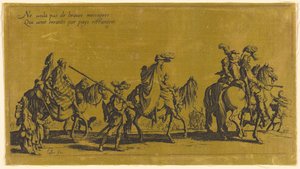
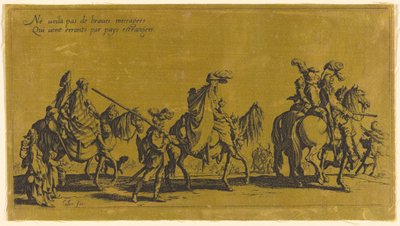
The Bohemians Marching: The Vang...
1621 |

Choose picture

Jacques Callot
 
Undated | etching

Choose picture

Jacques Callot
Eagle Losing an Old Feather, 1628.
Undated |

Choose picture

Jacques Callot
Mann streicht wie Geigenspieler ...
1621 |

Choose picture

Jacques Callot
 
Undated | etching

Choose picture

Jacques Callot
Les Penitents: St. Jérome
1632 | etching

Choose picture

Jacques Callot
 
Undated | etching

Choose picture

Jacques Callot
The Martyrdom of the Apostles: ...
1632 | etching

Choose picture

Jacques Callot
 
Undated | etching

Choose picture

Jacques Callot
The Fair at Impruneta, detail of...
1638 | oil on canvas

Choose picture

Jacques Callot
 
Undated | etching

Choose picture

Jacques Callot
Les deux grandes vues de Paris: ...
Undated | etching/etching/etching

Choose picture

Jacques Callot
Fat Beggar with Eyes Cast Down, ...
Undated |

Choose picture

Jacques Callot
Beggar Woman Receiving Charity, ...
Undated |

Choose picture

Jacques Callot
The Tour de Nesle, the Grande Ga...
1635 | oil on canvas

Choose picture

Jacques Callot
Pillage of a Farm (Le Pillage d'...
1633 | etching

Choose picture

Jacques Callot
 
Undated | etching and engraving on laid paper [restrike]

Choose picture

Jacques Callot
Two Beggar Women, c. 1622.
Undated |

Choose picture

Jacques Callot
Frontispiece of the Holy Apocata...
Undated |

Choose picture

Jacques Callot
 
Undated | etching and engraving//one of three prints on uncut sheet of Lorrainese paper (1949.5.257.a-c)

Choose picture

Jacques Callot
 
Undated | etching

Choose picture

Jacques Callot
Masked Lady, from the series “Th...
Undated | etching on laid paper

Choose picture

Jacques Callot
 
Undated | etching and engraving on laid paper [restrike]

Choose picture

Jacques Callot
Les Penitents: St. Jérome.
Undated | etching/etching/etching

Choose picture

Jacques Callot
One-eyed woman, from The Beggars...
Undated | etching

Choose picture

Jacques Callot
The Tree of St. Francis, c.1619 ...
1619 | etching

Choose picture

Jacques Callot
The Temptation of Saint Anthony ...
Undated | etching

Choose picture

Jacques Callot
Combat ? la Barri?re, Entr?e de ...
Undated | etching

Choose picture

Jacques Callot
 
Undated | etching

Choose picture

Jacques Callot
 
1623 | etching

Choose picture

Jacques Callot
Combat ? la Barri?re, Entr?e de ...
Undated | etching

Choose picture

Jacques Callot
 
Undated | etching

Choose picture

Jacques Callot
Coins [plate 6]
Undated | etching

Choose picture

Jacques Callot
Coins [plate 3].
Undated |

Choose picture

Jacques Callot
Old Beggar with One Crutch, c.1622
1622 | etching

Choose picture

Jacques Callot
Plan of the Church near the Hous...
Undated |

Choose picture


Page 1 / 36

About the artist

Jacques Callot
1592–1635
Born1592 (Nancy)
Died1635 (Nancy)
NationalityFrance
Professiongraphic artist, painter, etcher, draftsperson, engraver, copper engraver
TeacherPhilippe Thomassin, Jacques Bellange, Israël Henriet
StudentFrançois Collignon
Notable worksBeggar with Dog, from Les Gueux (The Beggars) (1623), Les Grandes Miseres de la Guerre: L'Arquebusade (1632), Les Grandes Miseres de la Guerre: L'enrolement des Troupes (1632), The Temptation of St. Anthony (1700)
MuseumsArt Institute of Chicago, ETH Graphische Sammlung, National Gallery of Art, Cleveland Museum of Art, Princeton University Art Museum

Even in his youth, Jacques Callot was a restless spirit. His hometown of Nancy was still an insignificant provincial town that still had its great heyday ahead of it. Twice he left his parents' home in order to be able to realize his dream of becoming an artist somewhere else. Remorsefully, he returned home each time and began an apprenticeship as a goldsmith. No sooner had this been completed than he was drawn to faraway Rome. He got a job with Philippe Thomassin, one of the most renowned engravers of his time, like Jacques Callot a migrant from the east of France. He learned quickly and much, but Rome was not the hub of the artistic world in the 17th century and he sought a new challenge in Florence. There he refined his etching technique in the workshops and studios of local masters Giulio Parigi and Antonio Tempestas.

No less a person than the legendary Cosimo II de' Medici encouraged the young talent from Nancy. Jacques Callot received an abundance of commissions from the famous princely house and earned very, very much money for the time. He was allowed to work completely freely and looked for his own motifs. He was particularly interested in the little people. He created scenes from the everyday life of the peasants from the surrounding area and the officials at the Medicis court. He dedicated numerous works to the actors and singers of the commedia dell'arte. After Cosimo's death, Jacques Callot was drawn back to his hometown of Nancy. The move from warm Italy to the sunless north seems to have weighed heavily on the artist at first. In the first period after his arrival, he did not create anything new, but merely produced new editions of his old motifs. It was to take two long years before he finally attracted attention at the court of the Lorraine duke Henry II. He documented the festivities at court in detailed etchings, created lifelike portraits of nobles, enchanting landscapes and milieu studies. Word of his talent spread, and both the French and Spanish royal families were among his clients in the years that followed. During that time, he also created probably his best-known and most famous etchings, which as Les misères de la guerre ( in German: Die Gräuel des Krieges) were to take a firm place in European art history.

Almost nothing is known about the personal life of the artist Jacques Callot. Whether he had affairs, was married and had children remains in the dark. Perhaps he was what today would be called a "nerd". A perfectionist who invented new etching tools, successfully sought out new printing techniques, and became completely absorbed in his vocation. The famous Rembrandt van Rijn collected many prints by Jacques Callot. The Dutch painter himself is considered a master of printmaking and admired the sophisticated work of his contemporary. In particular, the masterful depiction of perspectives and the distinctive light-dark depictions fascinate all experts to this day. Jacques Callot died at the age of only 43. Around 180 years later, the poet Ernst Theodor Amadeus (E-T.A.) Hoffmann created a literary monument to the artist he admired in his work "Fantasiestücke".


What our customers think about us


Frequently Asked Questions about Meisterdrucke


Personalizing your art print at Meisterdrucke is simple and intuitive: Choose a frame, set the image size, pick a printing medium, and add suitable glazing or a stretcher frame. We also offer additional customization options like mats, fillets, and spacers. If you have any questions, our customer service team is ready to help you create your perfect artwork.

At Meisterdrucke, you can visualize your configured artwork directly in your own room. Simply upload a photo of your space and see how the artwork looks in it. If you're visiting us on a mobile device — phone or tablet — our augmented reality feature brings the picture to life and projects it right into your room. A unique experience that combines art and technology.

Choosing the right medium is often a matter of personal taste. To give you a better idea, we've provided some images for each medium. We also offer a sample set of all paper variants, so you can decide not just visually but by touch as well. You can order the sample set free of charge — only shipping costs apply.

Don't worry! At Meisterdrucke, we don't just process orders mechanically. Every order is manually reviewed by our team. If we spot any inconsistencies or issues with your configuration, we'll get in touch with you right away. And of course, our friendly and patient support team is always here to help you with your configuration. We'll work with you by phone or email to adjust your image so the final result is exactly what you had in mind.


Still have questions?

Are you interested in an art print from our manufactory but still unsure? Do you need advice on choosing the medium or help with the order?

Our experts are happy to assist you.

+43 4257 29415
support@meisterdrucke.com
Mo-Do: 7:00 - 16:00 | Fr: 7:00 - 13:00

Still have questions?

Are you interested in an art print from our manufactory but still unsure? Do you need advice on choosing the medium or help with the order?

Our experts are happy to assist you.

+43 4257 29415
support@meisterdrucke.com
Mo-Do: 7:00 - 16:00 | Fr: 7:00 - 13:00


Meisterdrucke

   Kärntner Strasse 46
        9586 Finkenstein am Faaker See
        Austria
        +43 4257 29415
        support@meisterdrucke.com
Other languages

                   
Erfahrungen & Bewertungen zu Meisterdrucke
Post.at DHL Express Quehenberger Cargoboard
Kaiser Franz Joseph

Meisterdrucke
Kärntner Strasse 46
9586 Finkenstein am Faaker See · Austria
+43 4257 29415 · support@meisterdrucke.com
Post.at DHL Express Quehenberger Cargoboard


(c) 2026 meisterdrucke.uk