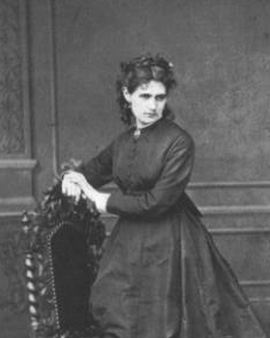
Berthe Morisot was one of the few women who already in the 19th century succeeded in emancipating herself and asserting herself as an artist with her own style. Morisot was born in 1841 in Bourges in the department of Cher. Her mother came from an influential upper middle-class family, who gave her talented daughter private lessons in painting and drawing at an early age. In the salon of her mother Marie Cornélie Thomas, Morisot came into contact with many famous artists of her time. Among them the composer Gioachino Rossini.
From the 1860s onwards, she first studied with the established landscape painter Camille Corot, whose style she considered to be outdated and therefore soon turned to the Impressionists. Here she developed a deep friendship with the painter Édouard Manet, who repeatedly portrayed her.
Berthe Morisot achieved her first successes in 1864, together with her sister Edma, when two paintings by each of the young artists were exhibited in the famous "Paris Salon". This was regarded as the first step towards professional painting for young artists of the time. Today, the paintings of the painter, who specialized in family scenes, portraits of women and children as well as interiors and landscapes, can be admired in museums all over the world. One of her most famous works, "The Cradle", dating from 1873, is on display at the Musée d'Orsay in Paris.
Berthe Morisot, who died in Paris in 1895, is today considered, alongside Mary Cassatt, to be the most important painter of her time.
 ×
× 






 Passionate Customer Service

.jpg "Hollyhocks, 1884 by Berthe Morisot")
.jpg)
.jpg "Julie Daydreaming, 1894 by Berthe Morisot")
.jpg)
.jpg "The Bowl of Milk by Berthe Morisot")
.jpg)
.jpg "Woman at Her Toilette, 1875-80 by Berthe Morisot")
.jpg)
.jpg "Child in the Hollyhocks, 1881 by Berthe Morisot")
.jpg)
_-_(MeisterDrucke-1459632).jpg "On the lake in the Bois de Boulogne, c. 1884 by Berthe Morisot")
_-_(MeisterDrucke-1459632).jpg)
.jpg "Study at the Water")
.jpg)
.jpg "Young Girl in a Park by Berthe Morisot")
.jpg)
.jpg "Young Girl with Naked Shoulders, 1885 by Berthe Morisot")
.jpg)
 1871 (pastel on paper) - (MeisterDrucke-112587).jpg "Portrait of Madame Edma Pontillon (1839-1921), 1871 by Berthe Morisot")
 1871 (pastel on paper) - (MeisterDrucke-112587).jpg)
.jpg "Devant la psyché, 1890 by Berthe Morisot")
.jpg)
.jpg "Woman in Grey Reclining, 1879 by Berthe Morisot")
.jpg)
.jpg "The Cradle by Berthe Morisot")
.jpg)
 and her Greyhound Laerte 1893 - (MeisterDrucke-62098).jpg "Julie Manet (1878-1966) and her Greyhound Laerte, 1893 by Berthe Morisot")
 and her Greyhound Laerte 1893 - (MeisterDrucke-62098).jpg)
.jpg "Garden in Bougival, 1884 by Berthe Morisot")
.jpg)
.jpg "The Garden at Bougival, 1884 by Berthe Morisot")
.jpg)
_-_(MeisterDrucke-1460099).jpg "In front of the mirror, c. 1890 by Berthe Morisot")
_-_(MeisterDrucke-1460099).jpg)
.jpg "In the Garden, c.1885 by Berthe Morisot")
.jpg)
.jpg "In the Apple Tree, 1890 by Berthe Morisot")
.jpg)
.jpg "Woman in Black or Before the Theatre, 1875 by Berthe Morisot")
.jpg)
.jpg "View of Paris from the Heights of the Trocadéro by Berthe Morisot")
.jpg)
.jpg "Girl in a Boat with Geese, 1889 by Berthe Morisot")
.jpg)
.jpg "Portrait of Marcelle, 1895 by Berthe Morisot")
.jpg)
.jpg "In the Wheatfield at Gennevilliers, 1875 by Berthe Morisot")
.jpg)
.jpg "Sketching by Berthe Morisot")
.jpg)
.jpg "In the Dining Room by Berthe Morisot")
.jpg)
.jpg "The Port of Nice by Berthe Morisot")
.jpg)
.jpg "Two Girls by Berthe Morisot")
.jpg)
.jpg "Self-Portrait by Berthe Morisot")
.jpg)
.jpg "The Fable by Berthe Morisot")
.jpg)
.jpg "Eugène Manet on the Isle of Wight, 1875 by Berthe Morisot")
.jpg)
.jpg "At the Ball by Berthe Morisot")
.jpg)
.jpg "Perch for Washerwomen by Berthe Morisot")
.jpg)
.jpg "The Sand Pies by Berthe Morisot")
.jpg)
_-_(MeisterDrucke-898392).jpg "Winter (Woman with a Muff) by Berthe Morisot")
_-_(MeisterDrucke-898392).jpg)
.jpg "Two Little Girls at a Balustrade by the Lake in the Jardin des Tuileries, Paris by Berthe Morisot")
.jpg)
.jpg "Under the Trees in the Wood, 1893 by Berthe Morisot")
.jpg)
.jpg "Pink Anemones by Berthe Morisot")
.jpg)
.jpg "The Artist")
.jpg)
.jpg "In the Dining Room by Berthe Morisot")
.jpg)
.jpg "The Lesson in the Garden by Berthe Morisot")
.jpg)
.jpg "Woman Dressing or Young Girl Putting on Her Stocking by Berthe Morisot")
.jpg)
.jpg "On the lakeside, 1883 by Berthe Morisot")
.jpg)
.jpg "‘Woman and child in a meadow at Bougival’, 1882 by Berthe Morisot")
.jpg)
.jpg "Summer")
.jpg)
.jpg "The Harbour at Lorient, 1869 by Berthe Morisot")
.jpg)
.jpg "Young woman sitting in front of a window, called Summer, 1879 by Berthe Morisot")
.jpg)
_-_(MeisterDrucke-1070714).jpg "Psyche, 1876 by Berthe Morisot")
_-_(MeisterDrucke-1070714).jpg)
_-_(MeisterDrucke-1745956).jpg "Young Women at their Toilette (title given by the artist) by Berthe Morisot")
_-_(MeisterDrucke-1745956).jpg)
.jpg "Nude, c. 1861-1895 by Berthe Morisot")
.jpg)
.jpg "Julie Daydreaming, 1894 by Berthe Morisot")
.jpg)
.jpg "The Mother and Sister of the Artist by Berthe Morisot")
.jpg)
 - (MeisterDrucke-229039).jpg "Female nude seen from behind, 1889 by Berthe Morisot")
 - (MeisterDrucke-229039).jpg)
.jpg "Peonies by Berthe Morisot")
.jpg)
.jpg "The Artist")
.jpg)
 - (MeisterDrucke-259189).jpg "Swans, 1885 by Berthe Morisot")
 - (MeisterDrucke-259189).jpg)
.jpg "Woman and Child by Berthe Morisot")
.jpg)
.jpg "Young Girl on the Grass, the Red Bodice, Mademoiselle Isabelle Lambert, 1885. by Berthe Morisot")
.jpg)
_-_(MeisterDrucke-896891).jpg "The Port of Nice, Winter 1881?-82 by Berthe Morisot")
_-_(MeisterDrucke-896891).jpg)
.jpg "Peonies by Berthe Morisot")
.jpg)
.jpg "Reading by Berthe Morisot")
.jpg)
.jpg "Dahlias by Berthe Morisot")
.jpg)
.jpg "Eugène Manet and his daughter in the garden at Bougival by Berthe Morisot")
.jpg)
.jpg "The Artist")
.jpg)
.jpg "The Butterfly Hunt, 1874 by Berthe Morisot")
.jpg)
 - (MeisterDrucke-66487).jpg "In a Park, c.1874 by Berthe Morisot")
 - (MeisterDrucke-66487).jpg)
.jpg "Dahlias, 1876 by Berthe Morisot")
.jpg)
.jpg "The Butterfly Hunt, 1874. by Berthe Morisot")
.jpg)
.jpg "Woman at Her Toilette, 1875-1880 by Berthe Morisot")
.jpg)
.jpg "The Psyche by Berthe Morisot")
.jpg)
.jpg "The Mother and Sister of the Artist by Berthe Morisot")
.jpg)
.jpg "The Bath, 1885-86 by Berthe Morisot")
.jpg)
_-_(MeisterDrucke-1656896).jpg "The lilacs at Maurecourt by Berthe Morisot")
_-_(MeisterDrucke-1656896).jpg)
.jpg "In the Bois de Boulogne by Berthe Morisot")
.jpg)
.jpg "The Piano by Berthe Morisot")
.jpg)
.jpg "Young Girl with Cat, 1892 by Berthe Morisot")
.jpg)
.jpg "Le Flageolet, 1890 by Berthe Morisot")
.jpg)
_Holding_a_Book_1889_-_(MeisterDrucke-93987).jpg "Portrait of Julie Manet (1878-1966) Holding a Book, 1889 by Berthe Morisot")
_Holding_a_Book_1889_-_(MeisterDrucke-93987).jpg)
.jpg "Young Woman Powdering Her Face by Berthe Morisot")
.jpg)
.jpg "Woman in a Garden by Berthe Morisot")
.jpg)
.jpg "In the Garden by Berthe Morisot")
.jpg)
.jpg "Peonies by Berthe Morisot")
.jpg)
.jpg "The Goose by Berthe Morisot")
.jpg)
 c1872 (wc and gr - (MeisterDrucke-640740).jpg "At the Edge of the Forest (Edma and Jeanne) by Berthe Morisot")
 c1872 (wc and gr - (MeisterDrucke-640740).jpg)
.jpg "The Thames by Berthe Morisot")
.jpg)
.jpg "Rest, 1888-1890 by Berthe Morisot")
.jpg)
.jpg "Landscape by Berthe Morisot")
.jpg)
_Oil_-_(MeisterDrucke-1028760).jpg "In the Bois de Boulogne by Berthe Morisot")
_Oil_-_(MeisterDrucke-1028760).jpg)
.jpg "Haystacks at Bougival, 1883 by Berthe Morisot")
.jpg)
.jpg "Red-haired girl sitting on a veranda, 1884 by Berthe Morisot")
.jpg)
.jpg "Reading, 1873 by Berthe Morisot")
.jpg)
.jpg "Forest of Compiègne by Berthe Morisot")
.jpg)
.jpg "Mlle. Louise Riesener by Berthe Morisot")
.jpg)
.jpg "Interior by Berthe Morisot")
.jpg)
.jpg "In the Veranda by Berthe Morisot")
.jpg)
.jpg "The Cherry Pickers, 1891 by Berthe Morisot")
.jpg)
.jpg "Nude by Berthe Morisot")
.jpg)
.jpg "Young Woman on the Sofa by Berthe Morisot")
.jpg)
.jpg "Forest in Fontainebleau, 1893 by Berthe Morisot")
.jpg)
_-_(MeisterDrucke-1723588).jpg "At the Edge of the Forest (Edma and Jeanne) by Berthe Morisot")
_-_(MeisterDrucke-1723588).jpg)

 +43 4257 29415
 support@meisterdrucke.com
 Mo-Do: 7:00 - 16:00 | Fr: 7:00 - 13:00